Skip to content
IMPORTED BEEF. CONSIDERED FOR YOUR TABLE IN CHINA.Personal selection · WeChat / WhatsApp
PRIME STEAK CHINA / THE BEEF GUIDE

Find your cut.
Know its worth.

A steak night for two or a roast for the whole table: start with what you want to cook. Then understand the difference in price, and the breed, production and grading details worth checking before you choose.

  1. Your cutFor the meal you have in mind
  2. Its valueKnow what you are paying for
  3. The evidenceCheck the actual product
Start with the cut guide ↘
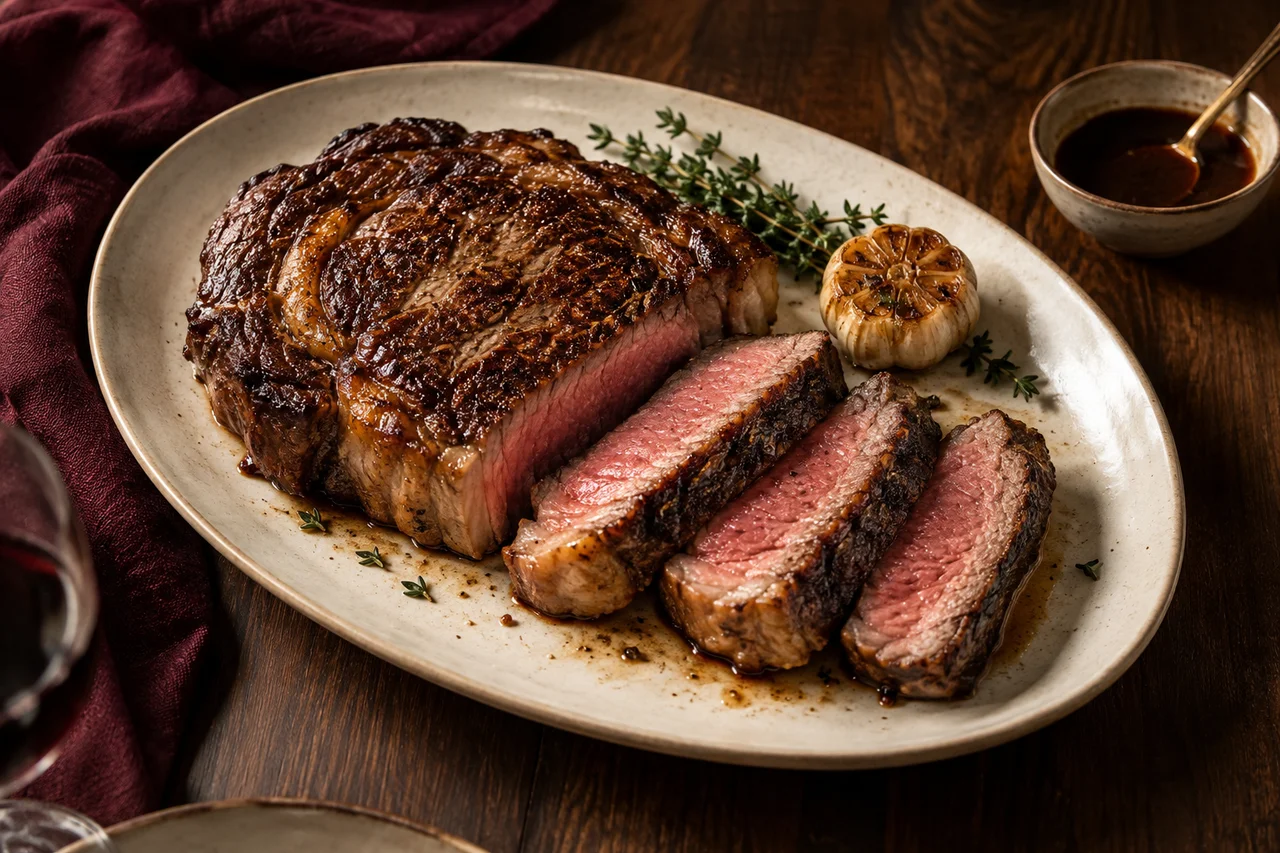
A carved thick-cut steak with a browned crust, thyme and roasted garlic on an ivory platter
A GREAT MEAL STARTS WITH THE RIGHT CUTServing inspiration · discover the actual cuts below
01 / NOSE TO TAIL

The right cut starts
with the meal.

Explore 35 trade entries in seven families, from familiar steaks to seam-separated muscles and A–F shin specifications. Inspect actual archive photographs, learn the important naming differences and choose a cooking direction. The twelve-cut comparison and fifteen-region animal map are here when you need them.

THE CUT REFERENCE / 35 TRADE ENTRIES

Beyond the familiar steak.

Find the right muscle, understand the trim, imagine the meal. A butcher’s reference for choosing with confidence.
35entries · 7 families

Steak cuts, seam-separated muscles, shin specifications and blending meat—organised by anatomy and use, not a quality ladder.

35 of 35 entries

17 / Rump & round

Tri-tip

Tri tipHAM 2131

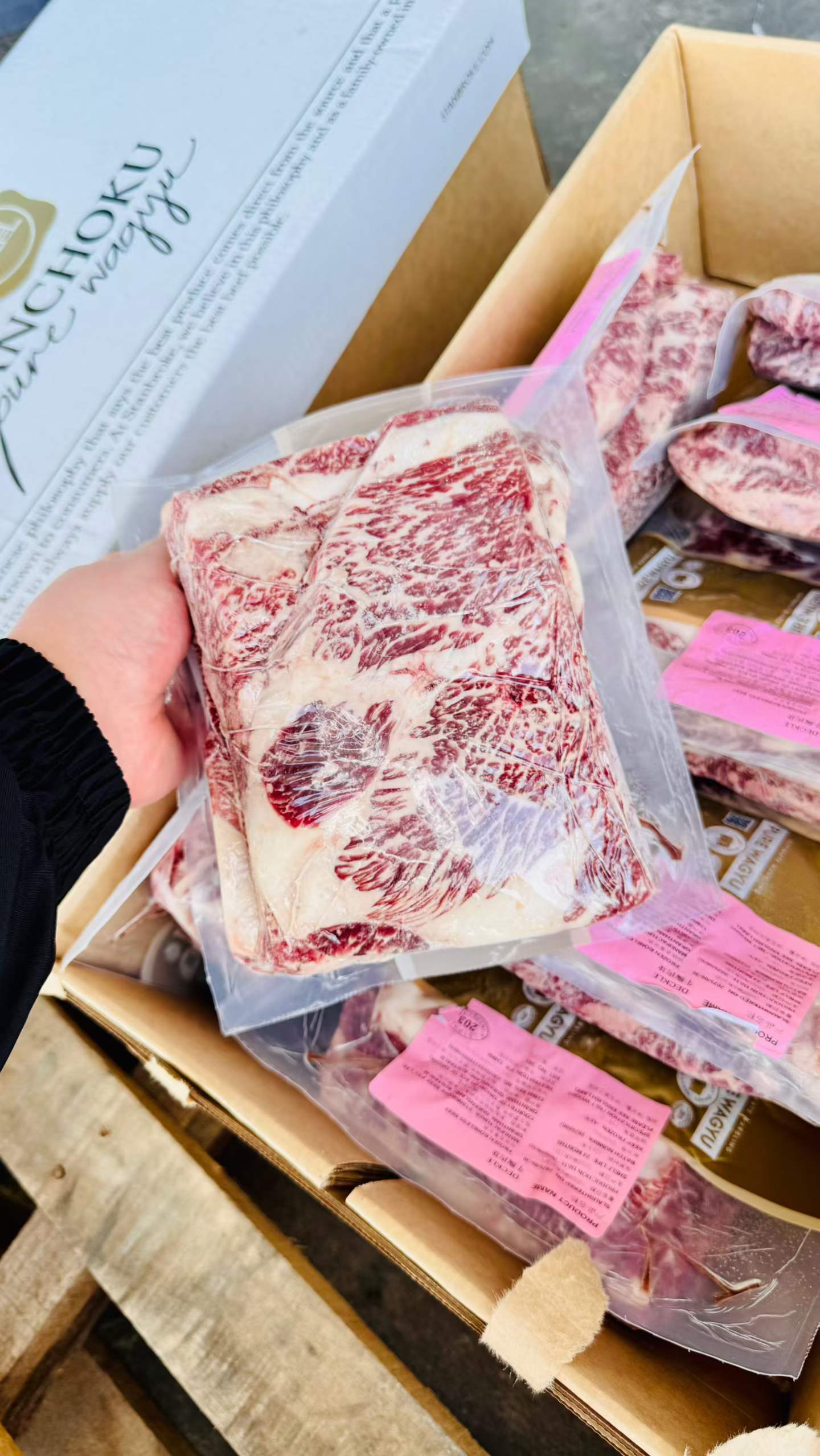
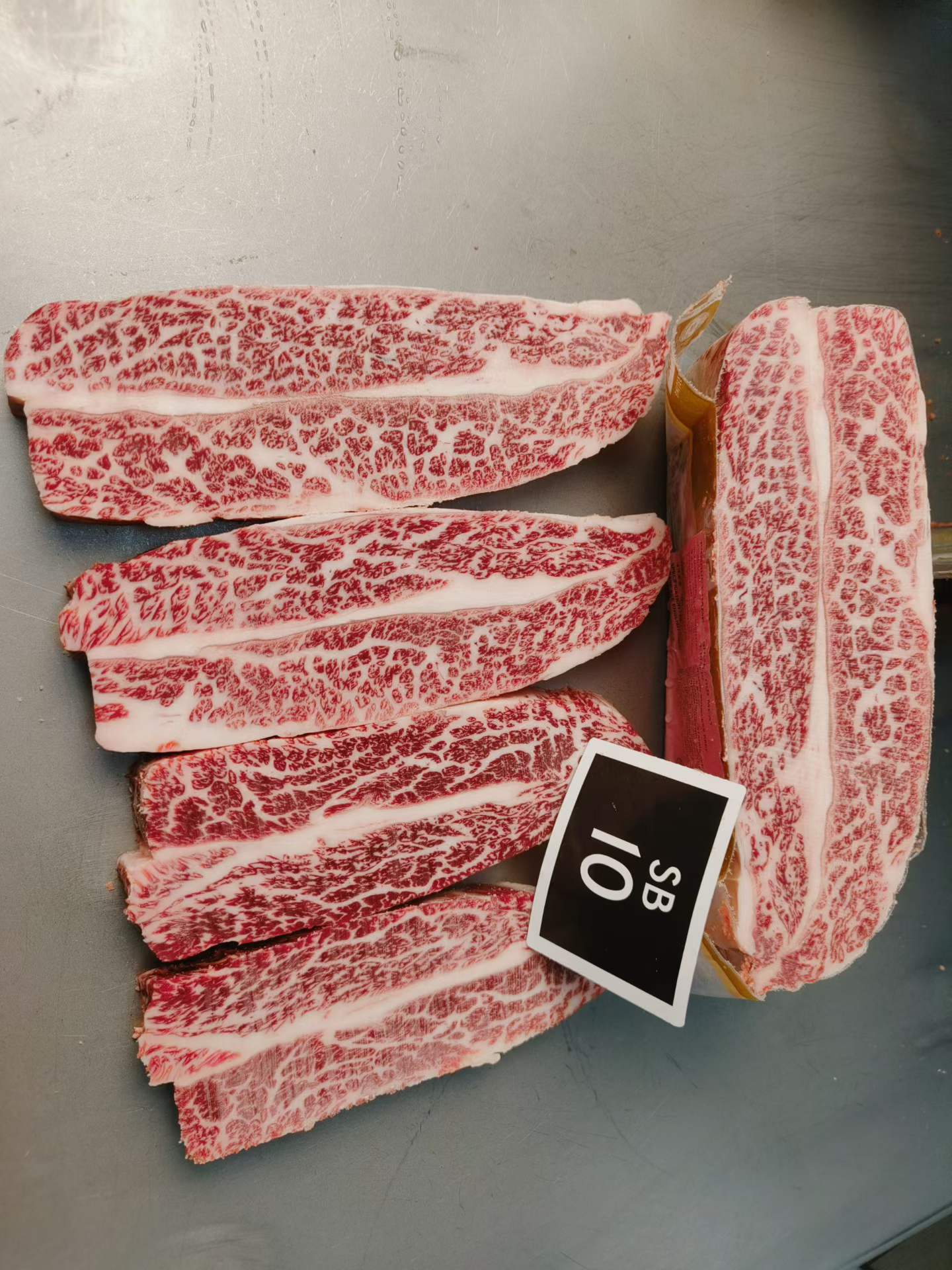
SANCHOKU PURE WAGYU · Tri-tip extended · supplier trim exampleView original
SANCHOKU PURE WAGYUTri-tip extended · supplier trim example
ON THE BLOCK

Structure shapes the experience.
A triangular muscle with a grain that changes direction: rewarding as a small whole-cut roast.
Grill & barbecueWhole-cut roasting
Where it comes from
The tensor fasciae latae, separated from the rump along its natural seam.
01

What to ask the butcher

Trim surface membrane. Identify both grain directions before cooking, then divide and carve each section across its grain.

02

Names worth getting right

Not chuck rib meat / “triangular shoulder”. This archive photograph is labelled TRI TIP EXTENDED; its trim is not proof of exact HAM 2131 conformity.

FROM CUT TO OCCASION

Picture it on your table.

Santa Maria-style tri-tip: grill a whole piece, then carve for a relaxed Californian-style gathering.

How to read this reference

The 35 entries follow the trade names in the Wagyu 08-22 archive: 33 grade-bearing listings and two CL manufacturing specifications. They include alternate trade names and A–F shin descriptions, not 35 independent muscles. Historical quantities and weights are not a live-stock offer.

Cut definitions and selected codes are cross-checked against AUS-MEAT and MLA. The code is a reference, not certification of a pictured pack. Archive photos illustrate the stated producer and cut; Angus examples are labelled. Confirm the actual product label, muscles, trimming, grade and availability before ordering.

THE WHOLE-ANIMAL ATLAS / 15 REGIONSWhere does each cut come from?Open the full animal map: head to tail, including internal cuts.
2.5D / WHOLE-ANIMAL ATLAS15 regions · choose a number or a name
Cattle profile with approximate beef-cut regions

Approximate regional orientation, not exact cutting lines. Dashed regions indicate internal items. International fabrication boundaries differ; this illustration cannot replace a cutting specification.

Found a cut you like? The next question is what makes one version worth more than another.

Understand the difference in price →
02 / WHAT MAKES IT WORTH IT?

What makes
this cut worth it?

The name and marbling number are only the beginning. A premium should have a clear explanation: what the cut gives you, what went into producing it, and why it suits the meal you want to make.

01 / THE CUT

Compare what reaches your board.

Tenderloin, rib cap and shoulder are different products. Even within one cut, trimming and usable yield matter. Compare the same cut and preparation specification—not just the pack weight or price per kilo.

02 / THE INVESTMENT

Look for the work behind the label.

Breeding, a defined feeding programme and daily care help explain production cost. The next chapters follow those details from breed and origin to named producer programmes, so you can ask which apply to your chosen beef.

03 / YOUR TABLE

Choose a meal, not just a higher number.

A rich tasting portion, a thick steak for two and a family roast call for different choices. Put your budget into the cut, portion and cooking experience you want. The highest marbling number need not be your starting point.

Now follow the reasons behind those differences—starting with the breed, then the place and the way the animal was raised.

Start with Angus, Wagyu and beyond →
03 / THE BREED ATLAS

Behind the name,
a breeding story.

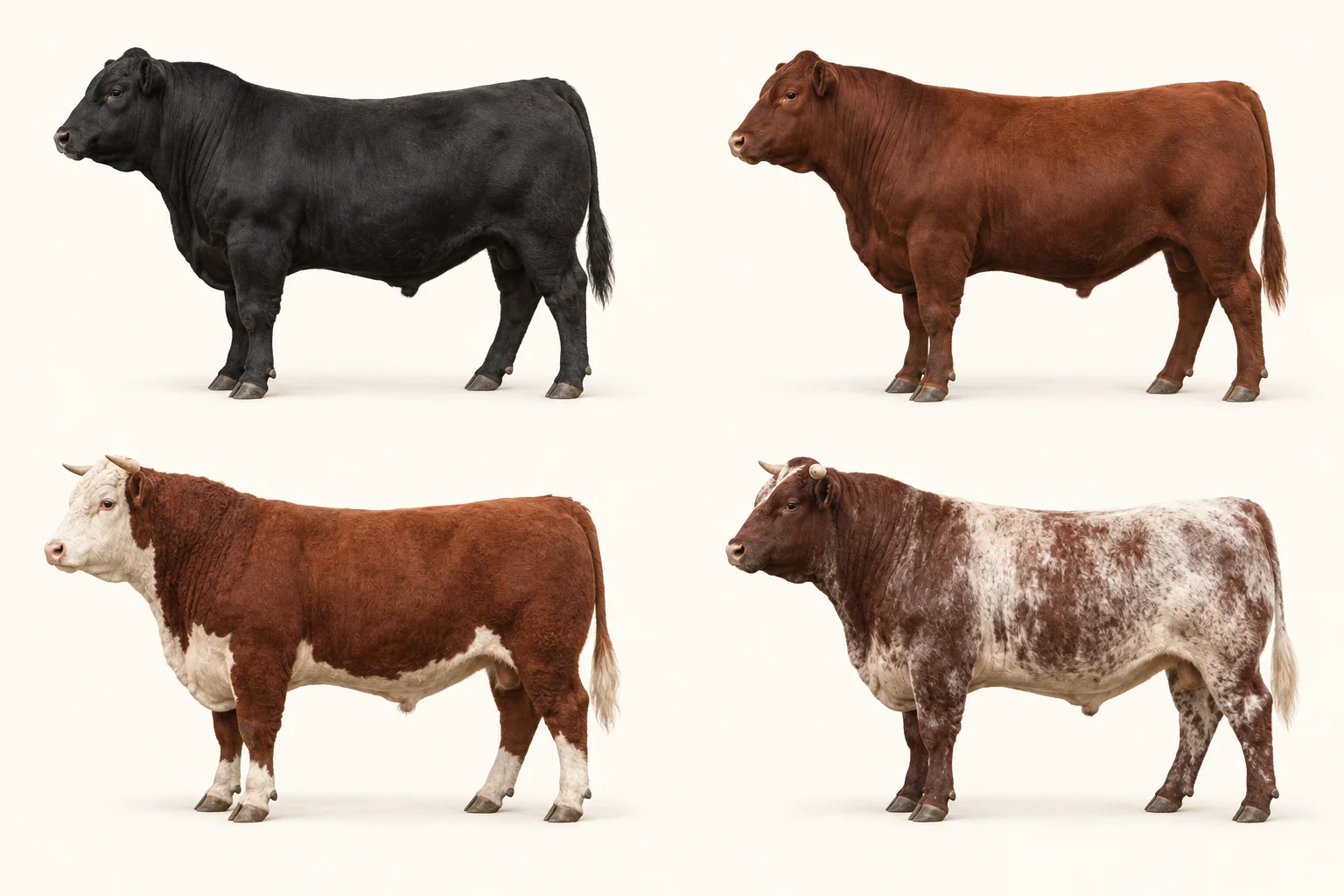
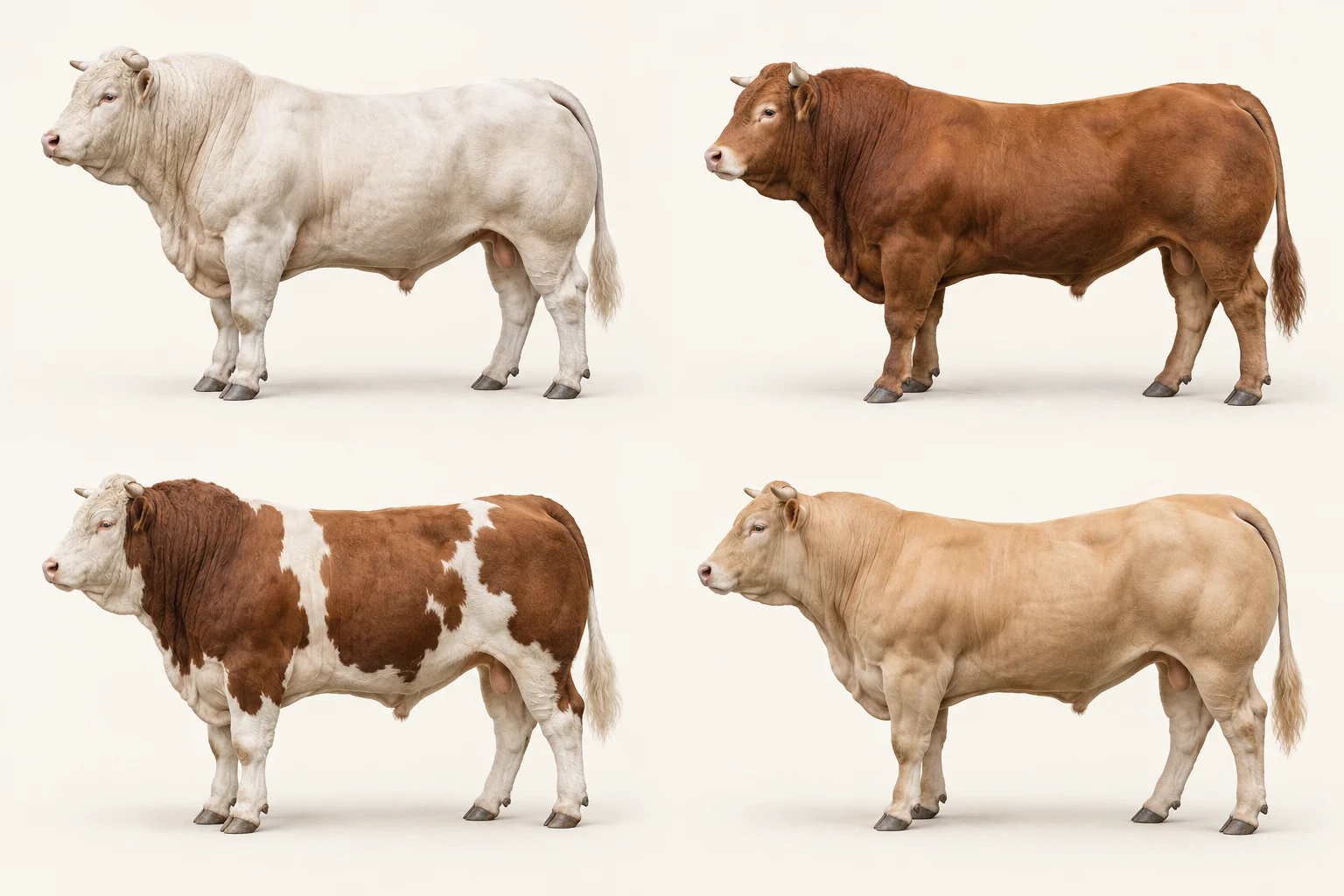
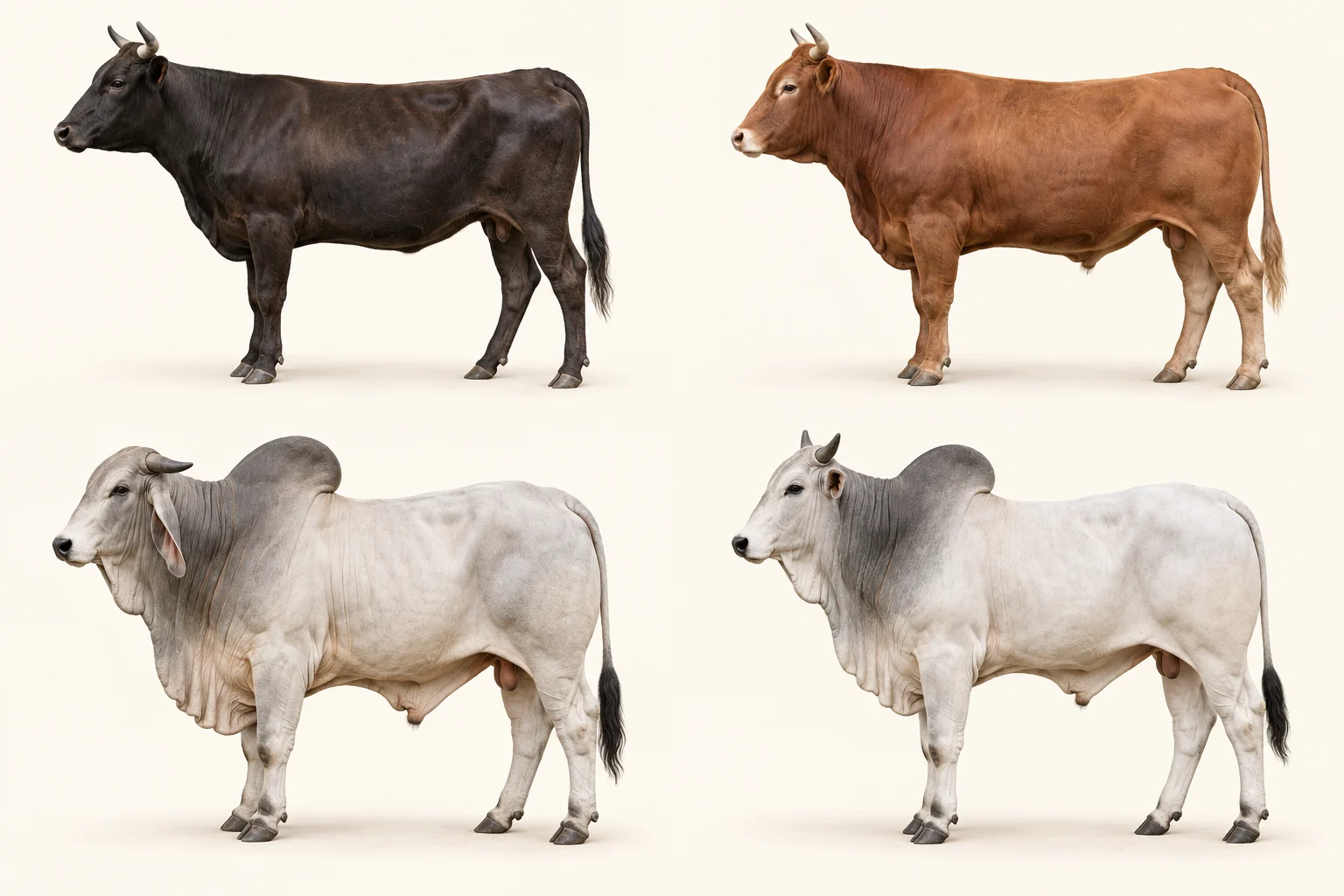
You know the cut and what to compare. Now look behind names such as Angus and Wagyu: the breed is one part of the product story, not a quality verdict. These twelve portraits introduce representative breeds and colour varieties.

Colour, horns and body shape vary within breeds; appearance alone cannot establish pedigree or predict a grade. Open a card for its field note and source.

British roots

The familiar steak-house names.

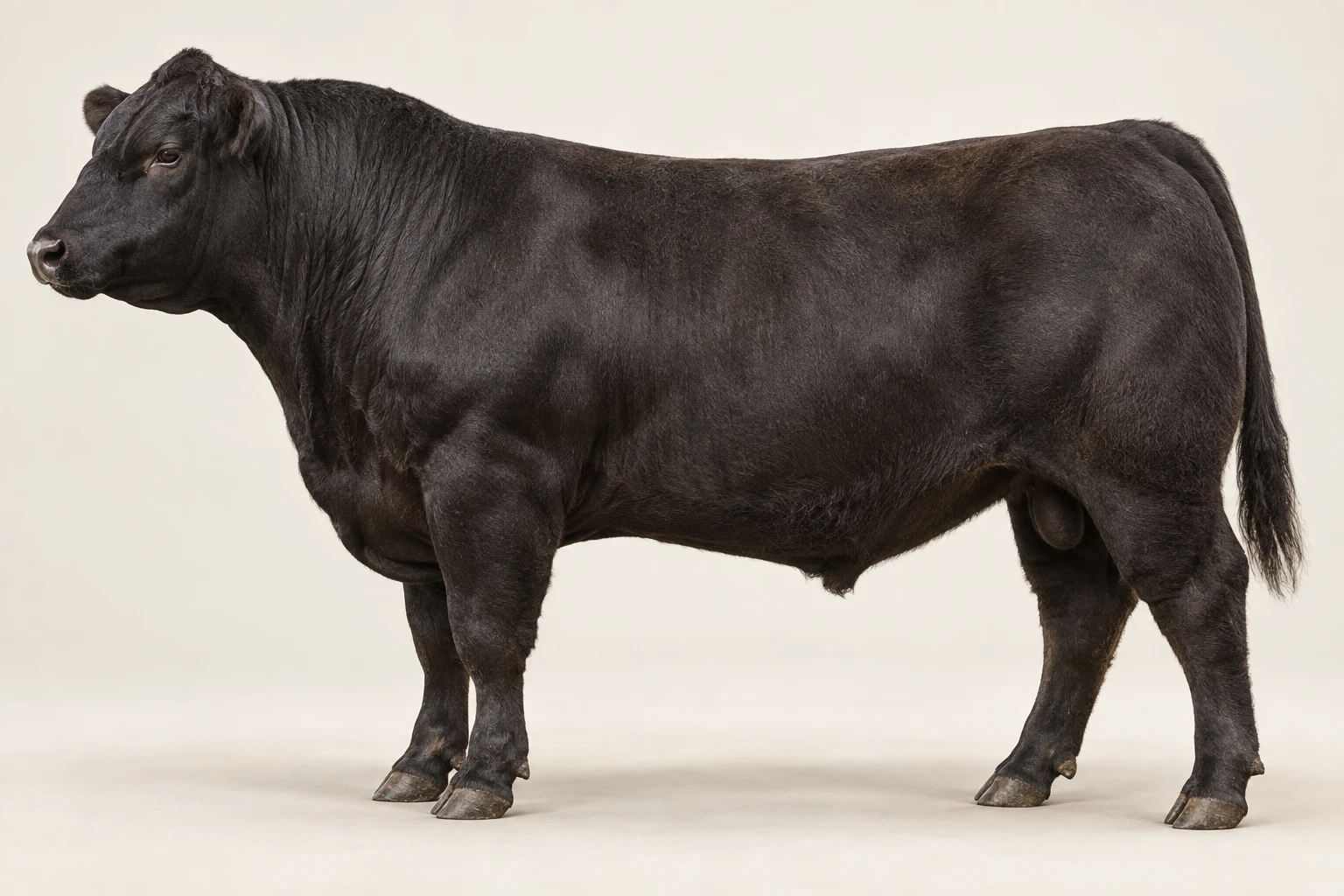
Black Angus · breed appearance reference
Scotland

Black Angus

Field notes

Naturally polled, usually solid black. Angus genetics are used across many beef-producing countries. A black coat alone does not prove Angus ancestry.

Breed reference ↗
Red Angus · breed appearance reference
Scottish Angus ancestry

Red Angus

Field notes

Red-coated, naturally polled Angus. Black and red are not different quality grades; registration practices vary between breed associations.

Breed reference ↗
Hereford · breed appearance reference
Herefordshire, England

Hereford

Field notes

Recognisable white face and red body. Horned and polled populations both exist. Widely used in pasture-based herds and crossbreeding.

Breed reference ↗
Beef Shorthorn · breed appearance reference
Northern England

Beef Shorthorn

Field notes

Red, white or roan coats. Beef Shorthorn is a beef-oriented population; the wider Shorthorn family also includes dairy lines.

Breed reference ↗

Continental character

Muscle, frame and a different expression of beef.

Charolais · breed appearance reference
France

Charolais

Field notes

Typically cream-white, large-framed and muscular. Its production story centres on growth and carcass yield—not a promise of a particular marbling score.

Breed reference ↗
Limousin · breed appearance reference
Limousin, France

Limousin

Field notes

Traditional golden-red colour with lighter muzzle and eye surrounds; black lines also exist. Noted for muscular hindquarters and lean yield.

Breed reference ↗
Simmental · breed appearance reference
Simme Valley, Switzerland

Simmental

Field notes

A widely distributed family with beef and dual-purpose lines. Red-and-white is a familiar appearance, but modern populations vary in colour.

Breed reference ↗
Blonde d’Aquitaine · breed appearance reference
South-western France

Blonde d’Aquitaine

Field notes

Light golden coat, a long frame and pronounced muscling. A reminder that premium beef need not always follow a high-marbling style.

Breed reference ↗

Japanese & tropical lineages

Two very different breeding stories—not a quality ranking.

Japanese Black · breed appearance reference
Japan

Japanese Black

Field notes

One of Japan’s four Wagyu breeds, central to many marbling-focused programmes. Tajima is a bloodline within Japanese Black, not a fifth Wagyu breed.

Breed reference ↗
Japanese Brown / Akaushi · breed appearance reference
Japan · Kumamoto & Kochi lines

Japanese Brown / Akaushi

Field notes

A distinct Wagyu breed, not red Angus. Wagyu does not mean every animal is black, Japanese-raised or graded A5.

Breed reference ↗
Brahman · breed appearance reference
US development from Indian zebu ancestry

Brahman

Field notes

A shoulder hump, loose dewlap and long ears distinguish this heat-adapted zebu breed. Important in tropical herds and composite breeding.

Breed reference ↗
Nelore · breed appearance reference
Indian ancestry · developed extensively in Brazil

Nelore

Field notes

Usually white-grey, with a hump and shorter ears than Brahman. A major part of Brazil’s beef story; it is not an Angus or Wagyu grading category.

Breed reference ↗
Wagyu is a family, not one black animal.

Japan recognises Japanese Black, Japanese Brown, Japanese Shorthorn and Japanese Polled, and qualifying crosses. The two Japanese entries above are representative, not the whole family. Australian Wagyu describes cattle bred and raised under Australian programmes—not automatically beef from Japan.

MAFF · The Wagyu breeds ↗
04 / A WORLD OF BEEF

Same breed.
Different places and programmes.

The breed tells you one part of the story; where and how it is raised adds another. A breed’s birthplace is not the origin of every cut bearing its name. Explore thirteen production contexts, then look at the feeding programme behind your chosen product.

AU / IN OUR PHOTO ARCHIVE

Australia

Queensland · New South Wales · Victoria · Western Australia

Angus, Wagyu and tropical crossbreeds

Pasture rearing and grain-finishing programmes can be stages of the same production journey. Compare the named programme, feeding specification and actual carton—not just “Australian beef”.

Read the sourceSee archived selections

Representative production contexts, not a complete country list. Highlighted archive origins do not mean live stock. China import access, establishment approval, batch eligibility and availability must be checked separately. Land: Natural Earth, public domain; pins indicate countries broadly, not specific farms.

05 / LINEAGE & FEEDING

What went into
raising this beef?

A breed and a country are only the beginning. Pedigree, feeding and daily management explain the production investment; named programmes and batch records show which claims belong to the beef you are considering.

01 / GENETICS

F1 to F4 is a pedigree story.

In a conventional successive backcross to Wagyu, the expected ancestry is approximately 50%, 75%, 87.5% and 93.75%. These are pedigree expectations, not DNA results for an individual animal.

F1
≈50%
F2
≈75%
F3
≈87.5%
F4
≈93.75%

Purebred and Fullblood have distinct pedigree requirements. F4 is not automatically Fullblood, and a higher F-generation is not a marbling grade.

Australian Wagyu Association · Wagyu Content Check ↗
02 / TIME & FEED

Long feeding takes resources.

Feed, daily care and management continue throughout a finishing programme. Longer programmes can help explain cost, but genetics, nutrition and management work together; more days do not guarantee better flavour for everyone.

Age How old the animal is.

Days on feed Time in the specified feeding programme.

Ageing Time after slaughter under controlled conditions.

See 130-, 180-, 400- and 500-day programmes ↗
03 / THE ACTUAL MARBLING

Angus and Wagyu: same question, different programmes.

Australian Angus and Wagyu do not have separate universal national grade ladders. Keep the producer’s specification intact: a 3+ minimum is not a closed 3–4 range.

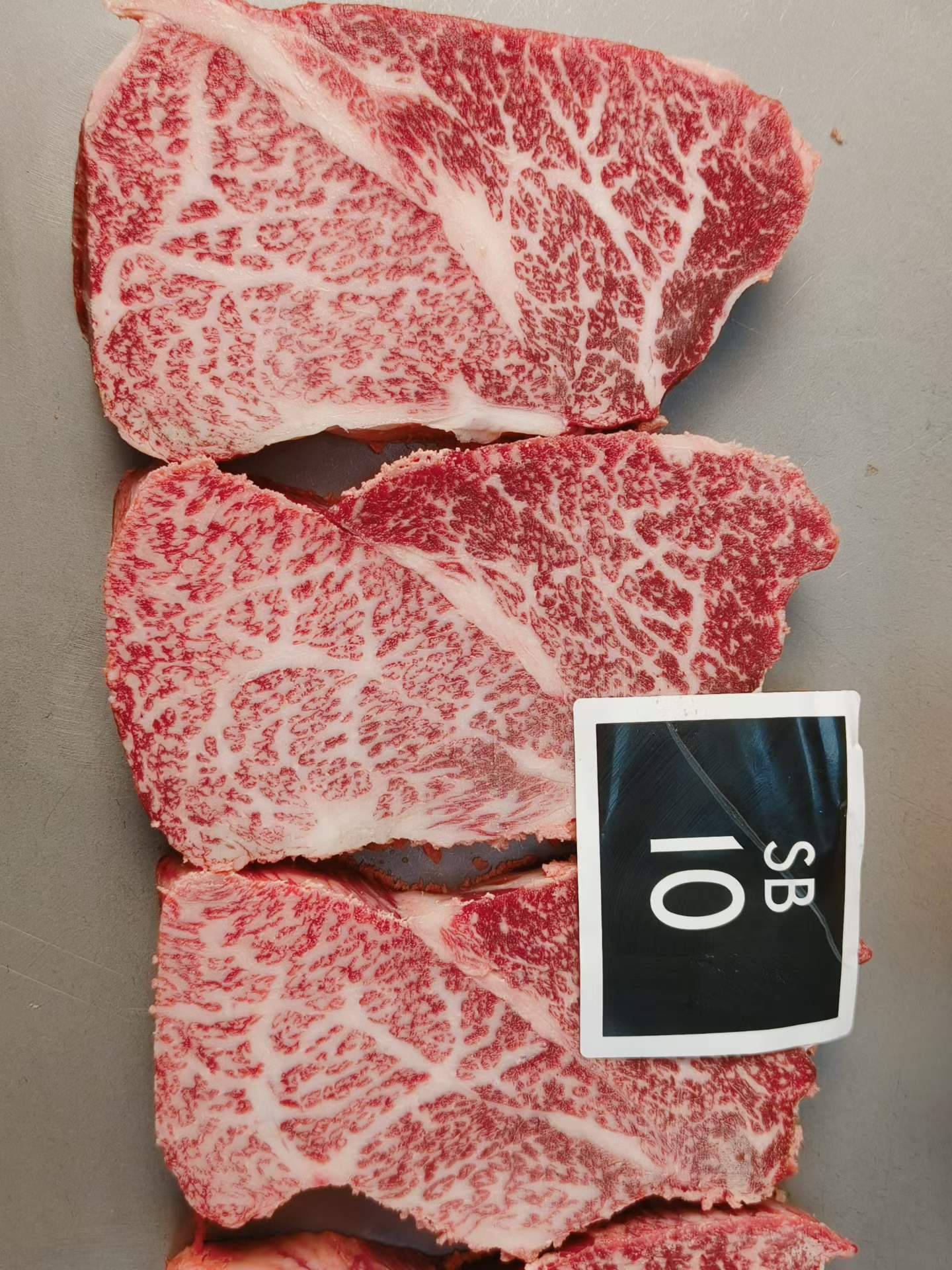
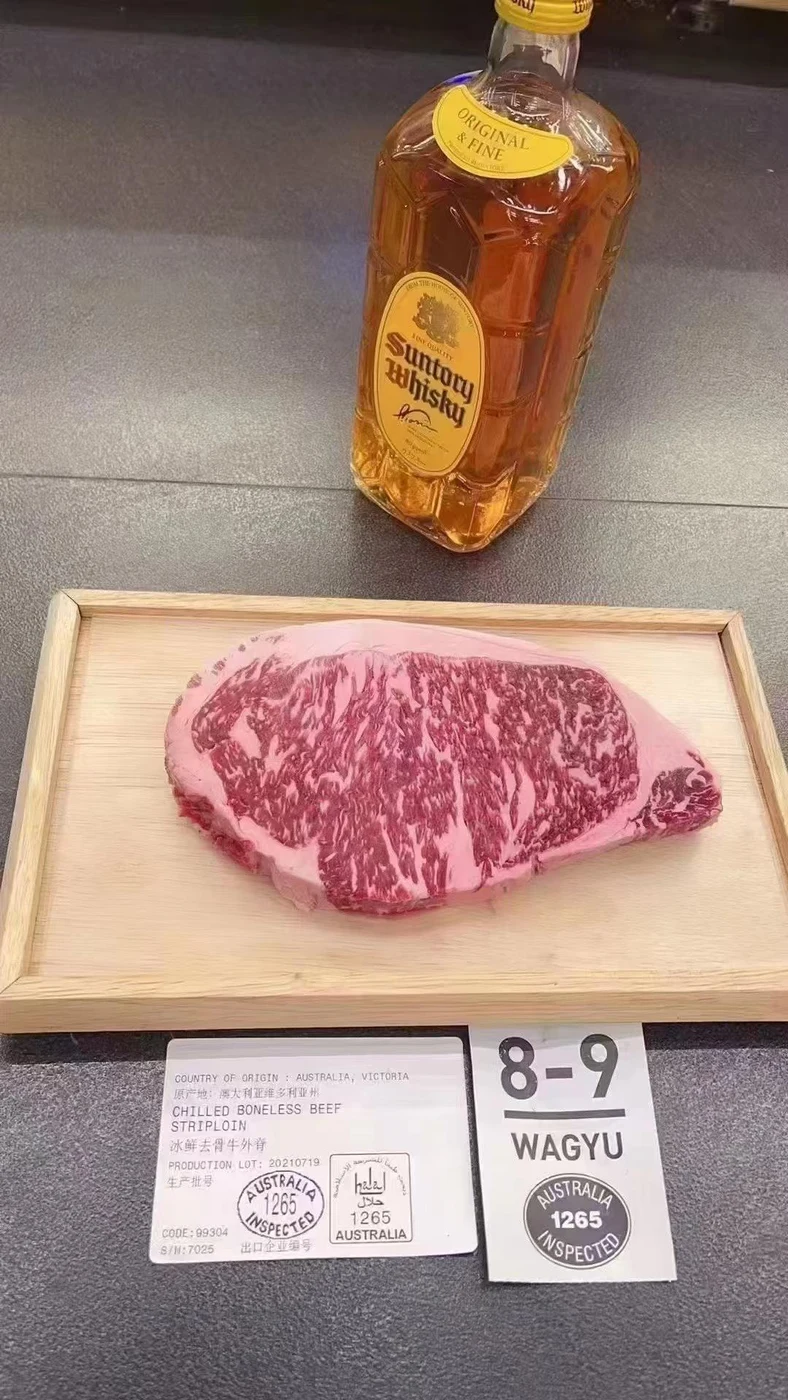
Our Angus archive includes 0–2, 2–3, 3–4, 3+, SB5 and 5+. Wagyu examples include 2–3, 4–5, 6–7, 8–9 and 9+. These are recorded examples, not a universal stock list.

AUS-MEAT’s base scale is 0–9; the Australian Wagyu Association also discusses 9+ at the top end. Keep MB9+ as written, without converting it into Japanese A5 or a score of 10.

Australian Wagyu Association · Marbling ↗MLA · AUS-MEAT marbling ↗
FOLLOW THE PRODUCTION JOURNEY

A story you can trace.

A programme explains an investment. A batch label establishes which product you are actually choosing. Keep both.

  1. 01Breeding

    Pedigree and selection

  2. 02Rearing

    Pasture and development

  3. 03Finishing

    Feed, time and daily care

  4. 04Processing

    Grading, ageing and cutting

L’grow tenderloin sample, photographed cut surface
Archived product photograph · not a feeding certificate
400days · feeding programme
LOTTE L’grow

Time, managed in Queensland.

At Sandalwood, L’grow describes a 400-day feeding commitment before processing at John Dee. The story is not simply “wait longer”: feed, daily care and continuity of management are the investment.

Follow the producer’s story ↗
OMINO Wagyu striploin archive sample
Archived product photograph · not a feeding certificate
380final days · nutritional feeding
OMINO

Japanese inspiration, Australian ground.

OMINO draws inspiration from the Omi tradition while raising cattle in Australia. Its producer emphasises precise nutrition in the final 380 days. Inspiration is part of the story; actual origin stays on the label.

Follow the producer’s story ↗
Jack’s Creek whole-cut archive photograph
Archived product photograph · not a feeding certificate
130–500days · different named programmes
JACK’S CREEK

One brand is not one feeding recipe.

Jack’s Creek distinguishes Pure Black Angus, Verified Black Angus, Wagyu X and Purebred Wagyu programmes. Their 130, 180, 400 and 500-day specifications belong to different products—not every box carrying the logo.

Follow the producer’s story ↗
Long-fed is a cost story—not an automatic verdict.

Genetics, nutrition, health and management work together. Feeding days are not slaughter age or post-slaughter ageing days. A longer programme cannot, on its own, guarantee a grade or establish a health advantage.

06 / GRADING, DECODED

Understand the story.
Then check the label.

Bring the production story back to the product: which system is on its label, and what does that system assess? These eight perspectives measure different things—marbling, eating quality, yield or fat cover—not one universal ranking.

AU

Australia · separate the score from the programme

AUS-MEAT
0123456789

AUS-MEAT uses 0–9 to assess marbling amount in the eye muscle. Angus and Wagyu do not have two separate universal national marbling ladders.

MSA MARBLING
100 1,190

MSA marbling considers amount and distribution, in increments of 10. It is assessed independently of AUS-MEAT. This marbling score alone is not the whole MSA eating-quality prediction.

MLA · AUS-MEAT & MSA ↗
MB3+ is a minimum. MB3–4 is a range.

Preserve MB / MS / SB exactly as recorded and ask which system the brand uses. Commercial ranges can overlap and are not a universal official grouping. AWA also describes the top-end 9+ notation; do not rewrite a brand’s 9+ as Japanese A5 or AUS-MEAT 10.

Australian Wagyu Association ↗

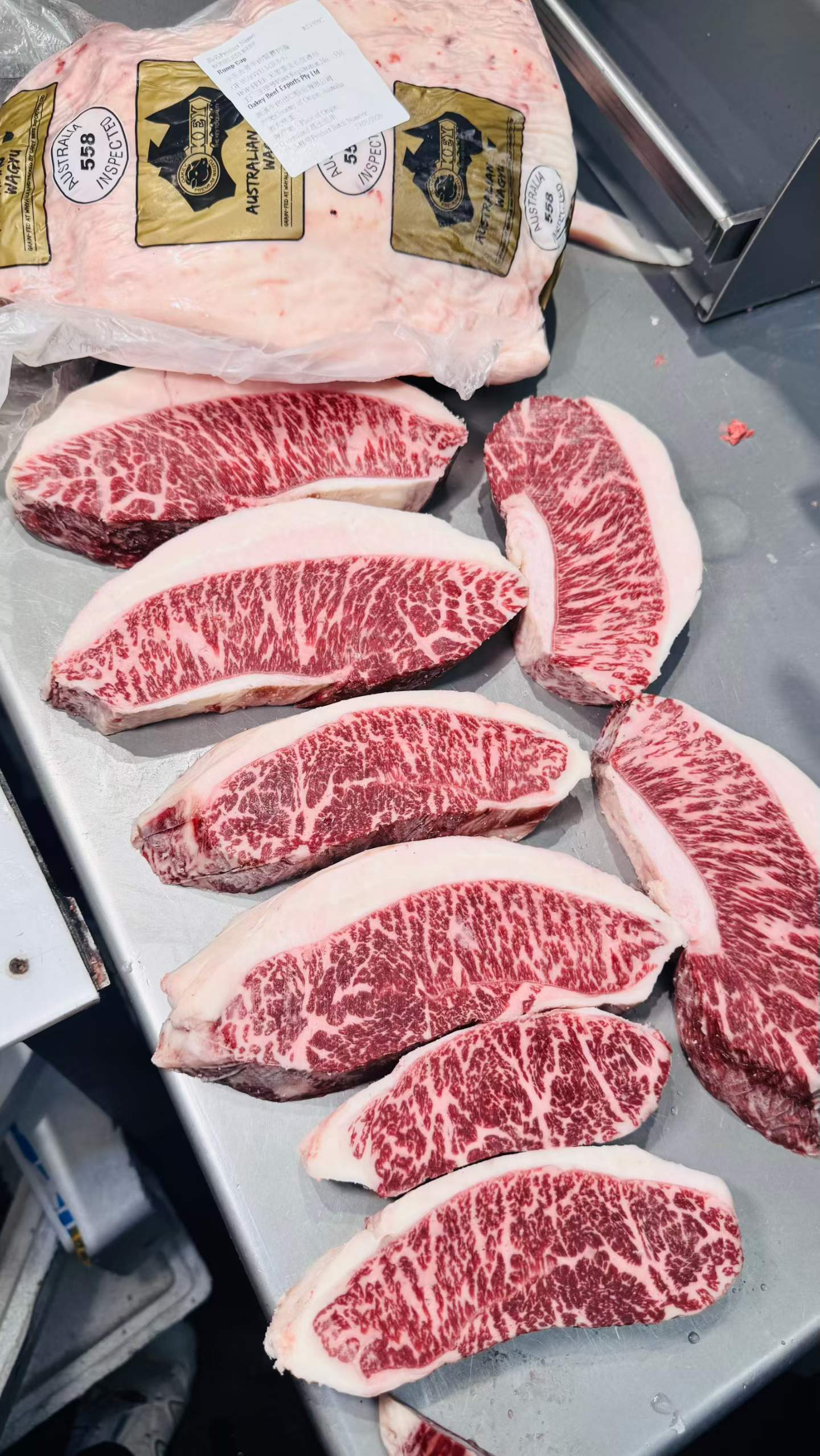
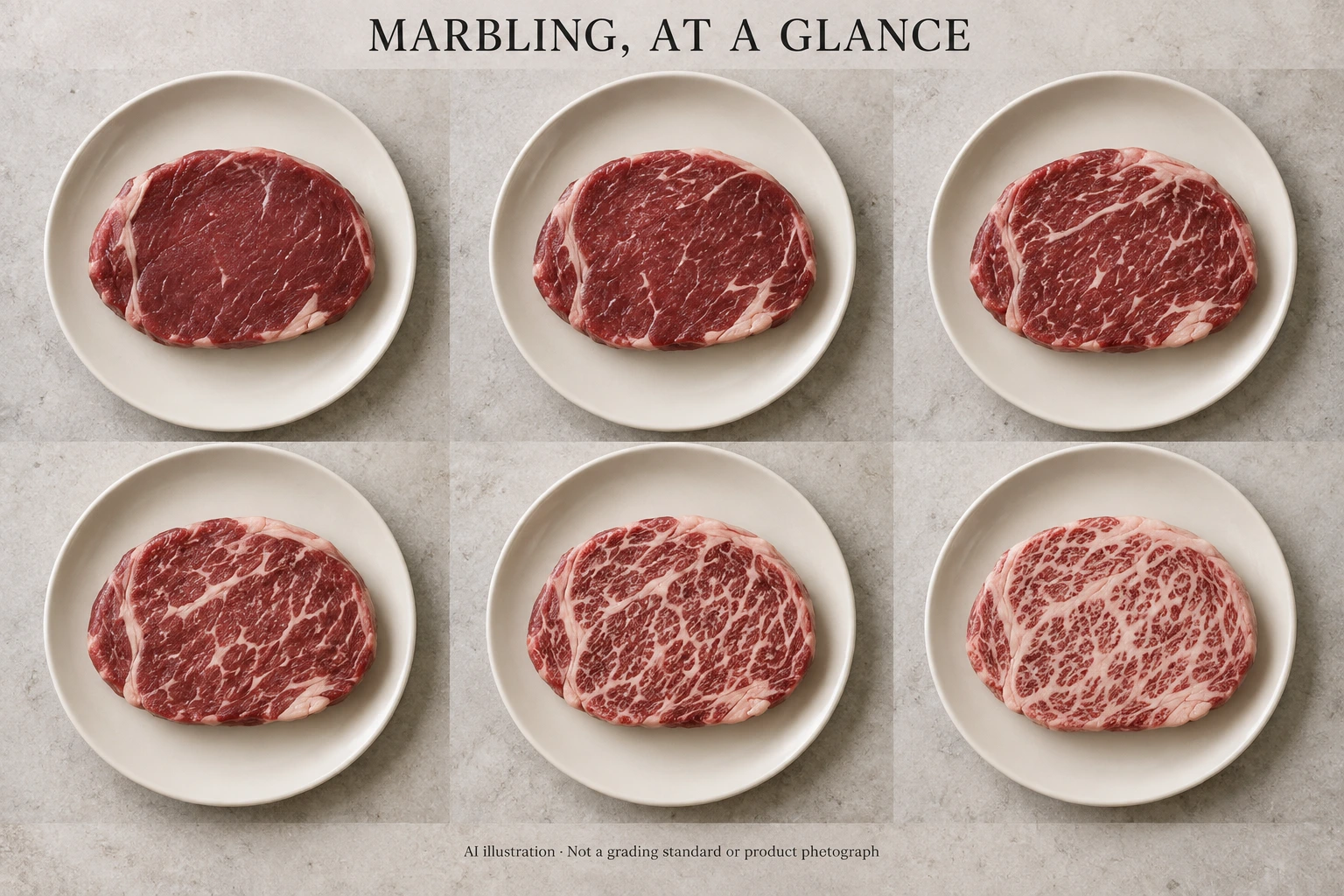
Six marbling bands, illustrated.

Illustrative groupings, with the cut, plate and lighting kept consistent. Compare the progression from light to rich marbling.

M0–2
M3–4
M5–6
M7–8
M9
M9+
View real cut faces & carton labels · Australian Wagyu +

Five archived brand specifications, photographed across different cuts and batches. Use them to inspect labels and product evidence, not as a controlled marbling comparison.

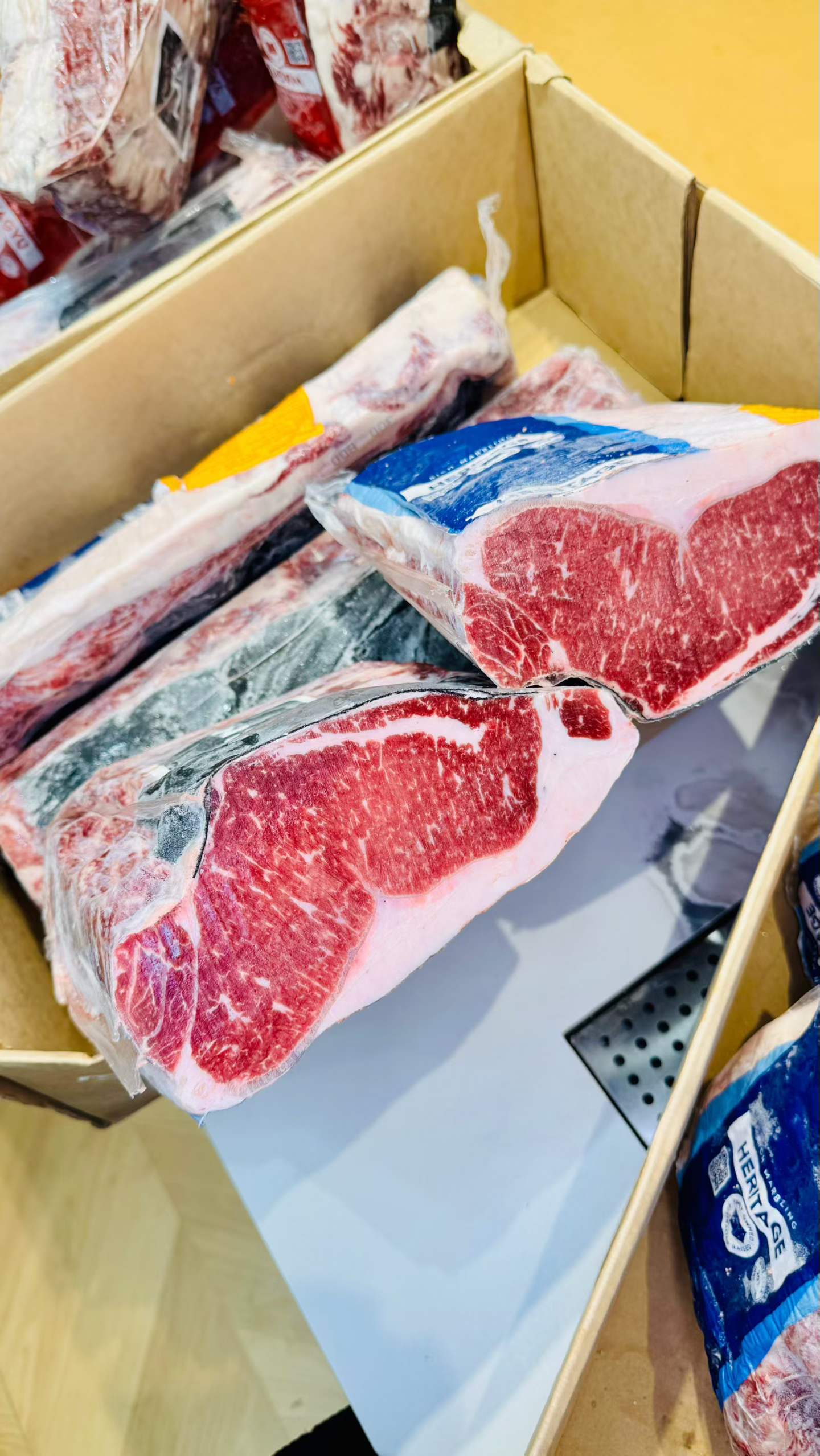
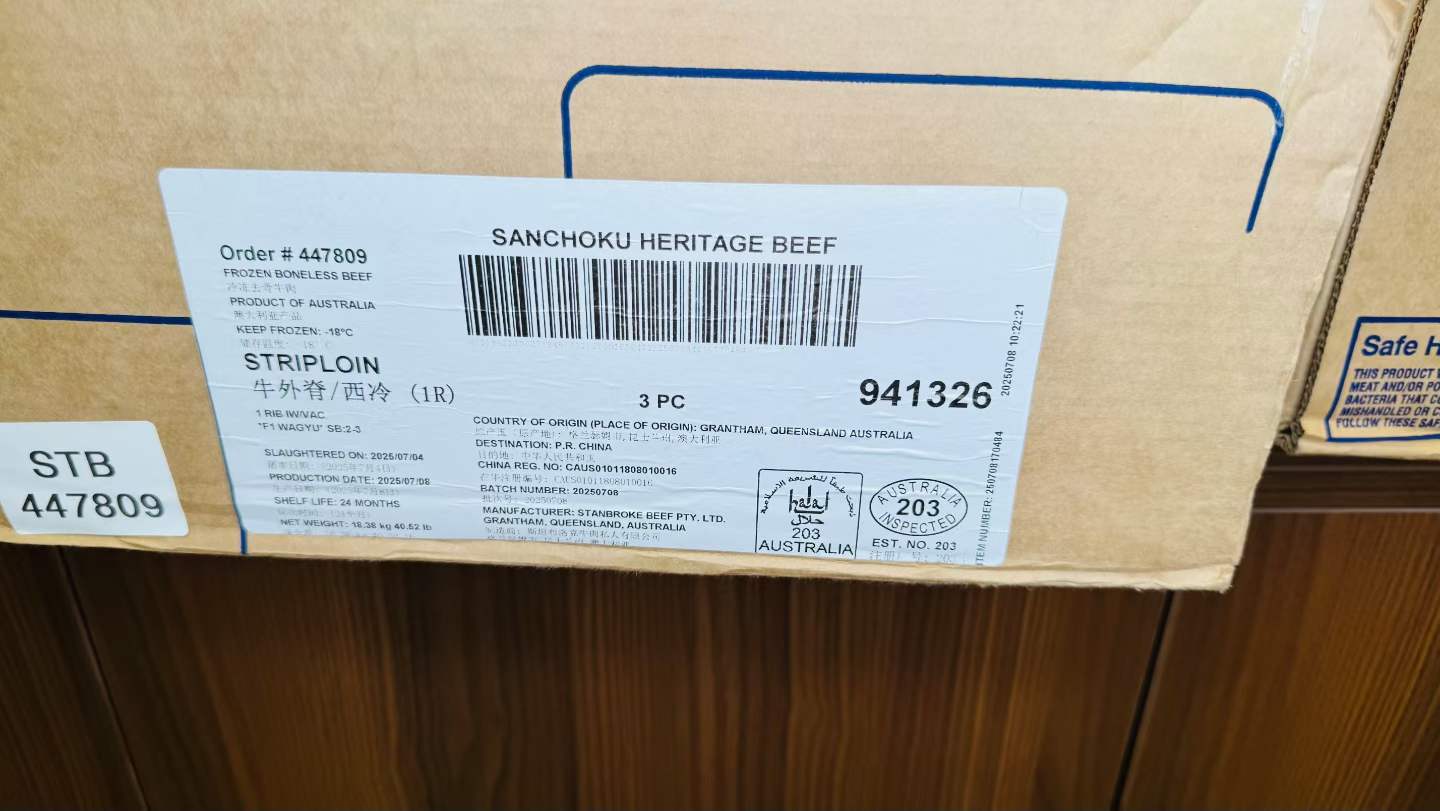
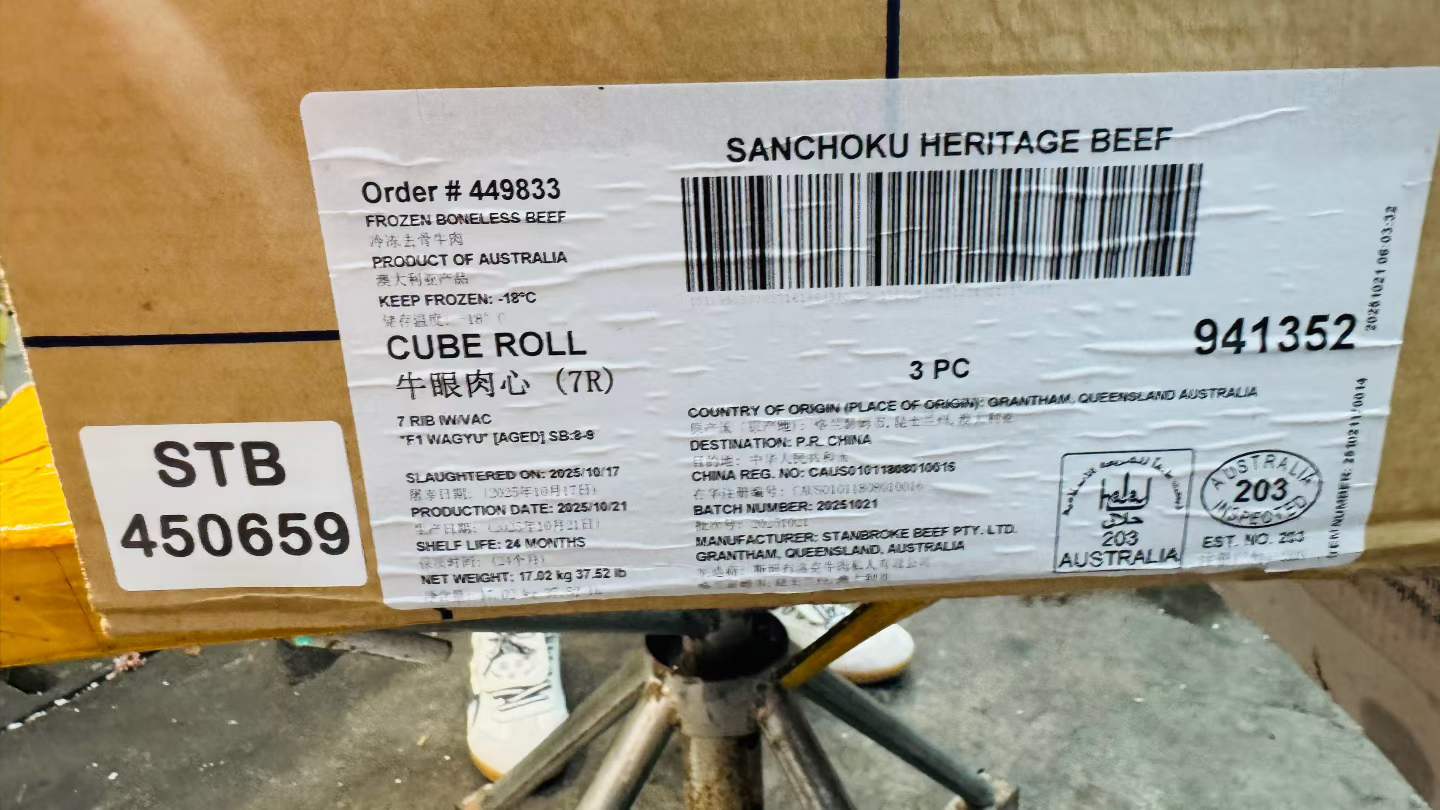
SANCHOKU HERITAGE · F1 WAGYU SB2–3 · archive view 1SANCHOKU HERITAGE · F1 WAGYU SB2–3 · archive view 2
SANCHOKU HERITAGE

F1 WAGYU SB2–3

Packaging label

The carton reads F1 WAGYU SB2–3. The individual package sticker says SB3; the carton range is retained.

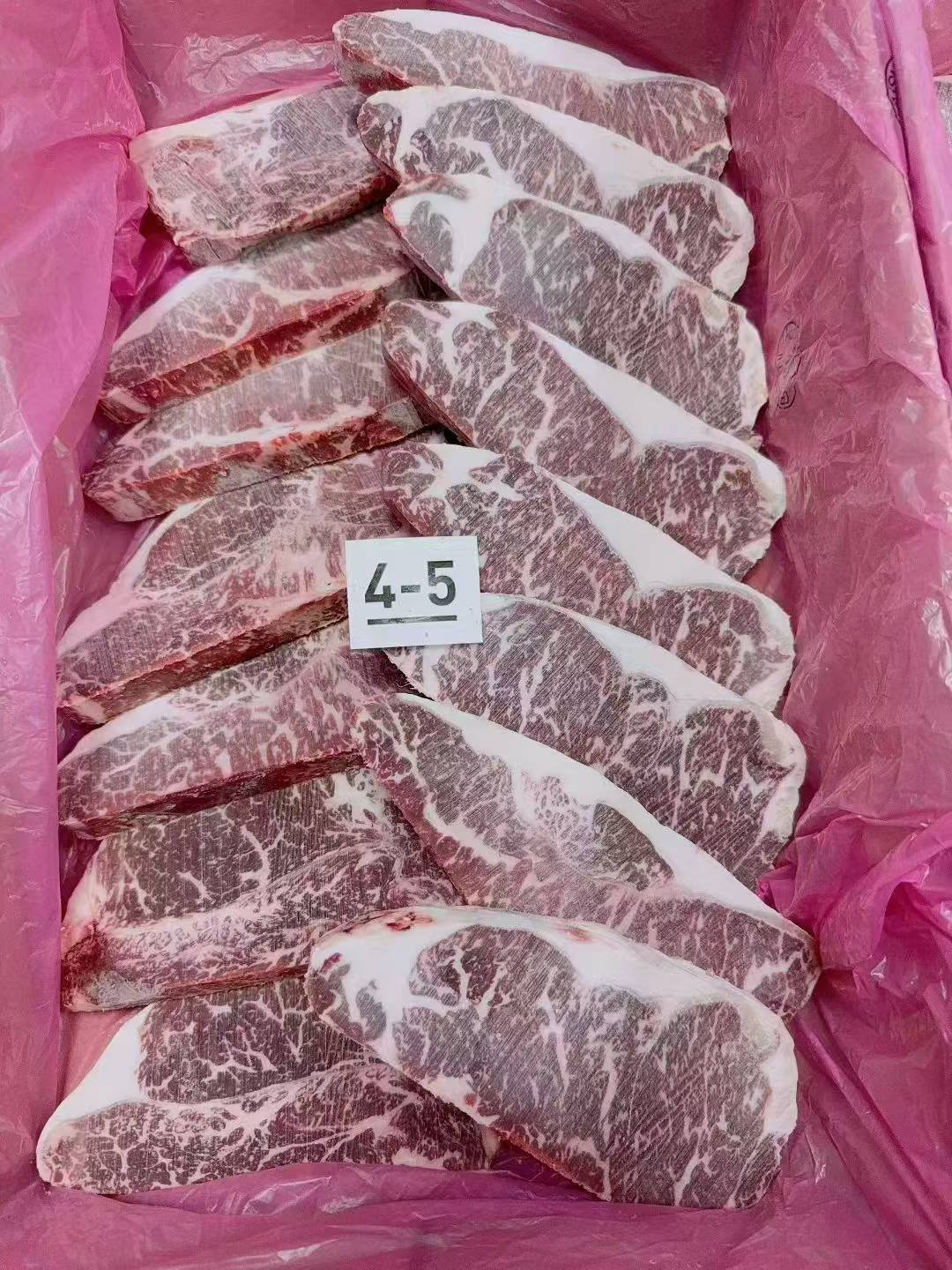
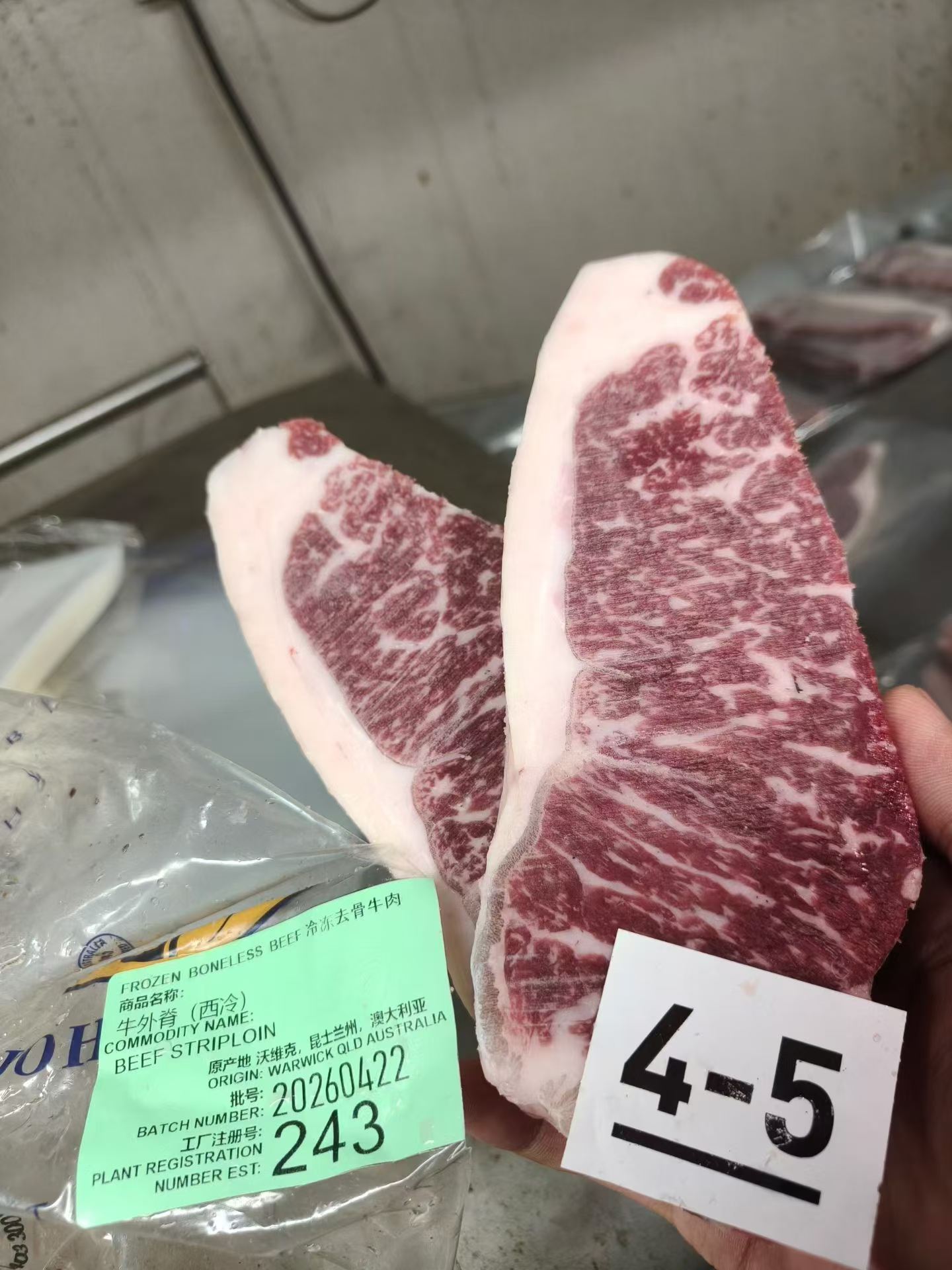
JOHN DEE · 4–5 · archive view 1JOHN DEE · 4–5 · archive view 2
JOHN DEE

4–5

Display card / sticker

A 4–5 display card is photographed with the cuts and BEEF STRIPLOIN label, plant 243.

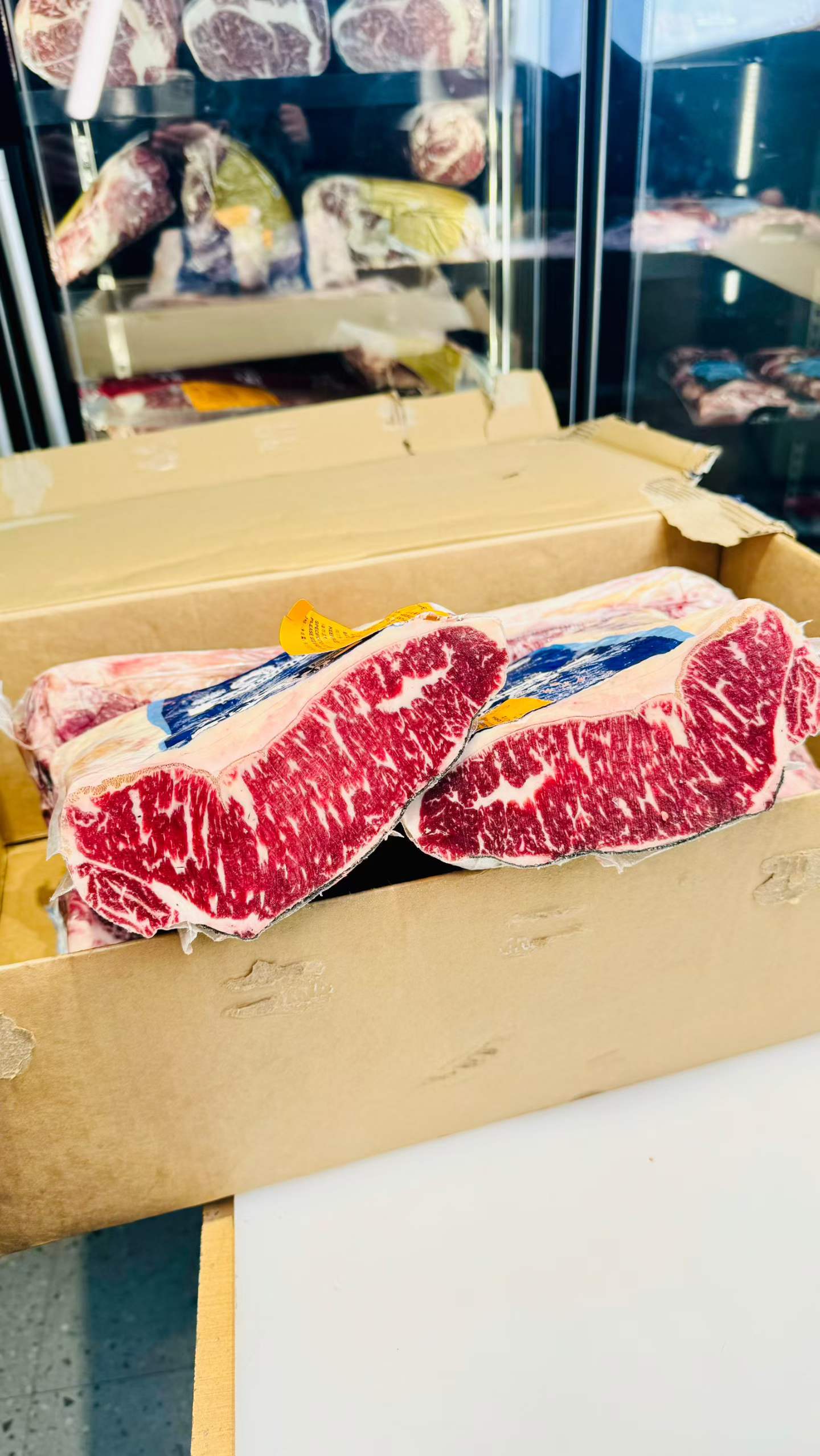
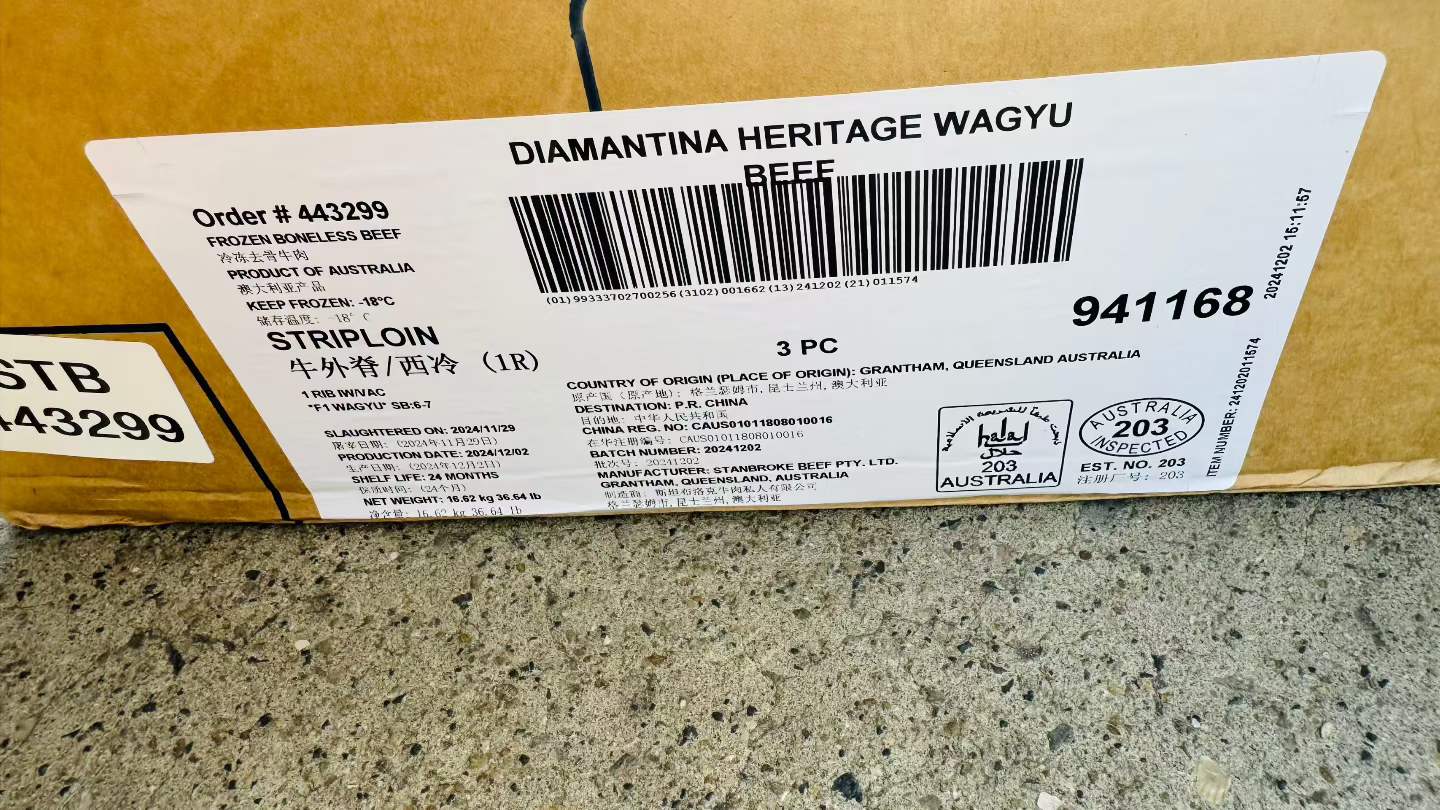
DIAMANTINA HERITAGE · F1 WAGYU SB6–7 · archive view 1DIAMANTINA HERITAGE · F1 WAGYU SB6–7 · archive view 2
DIAMANTINA HERITAGE

F1 WAGYU SB6–7

Packaging label

The carton identifies striploin, F1 WAGYU SB6–7 and Australian plant 203.

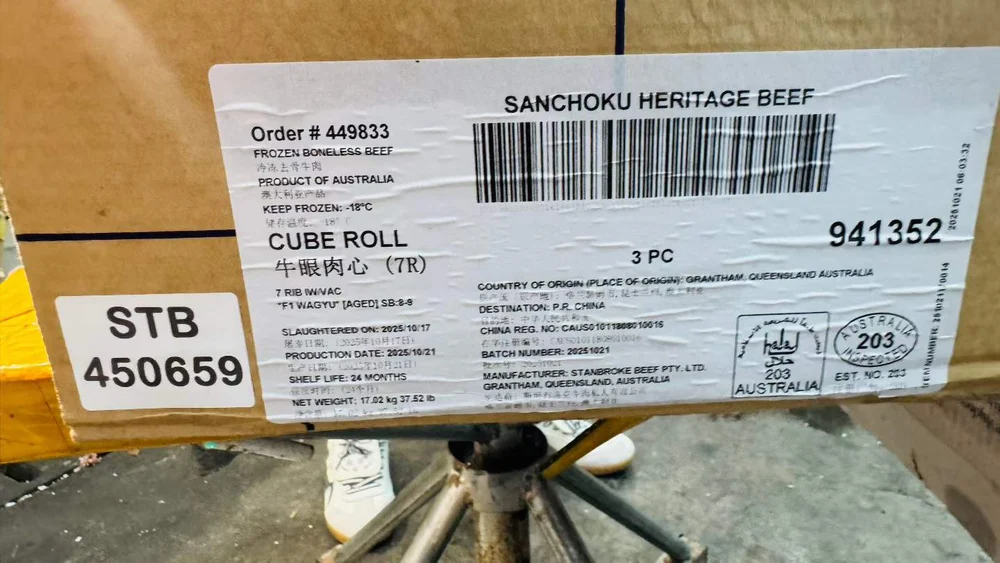
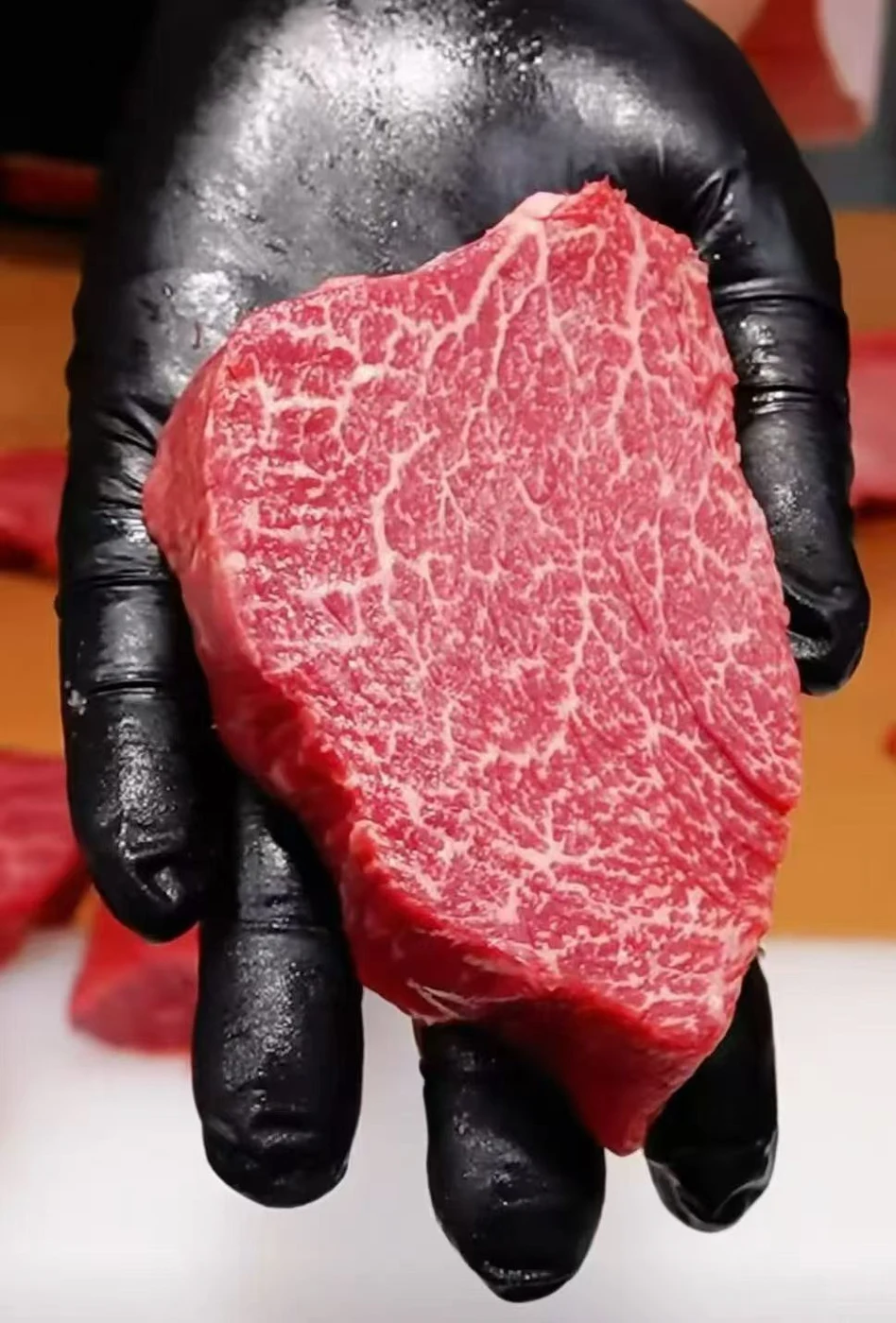
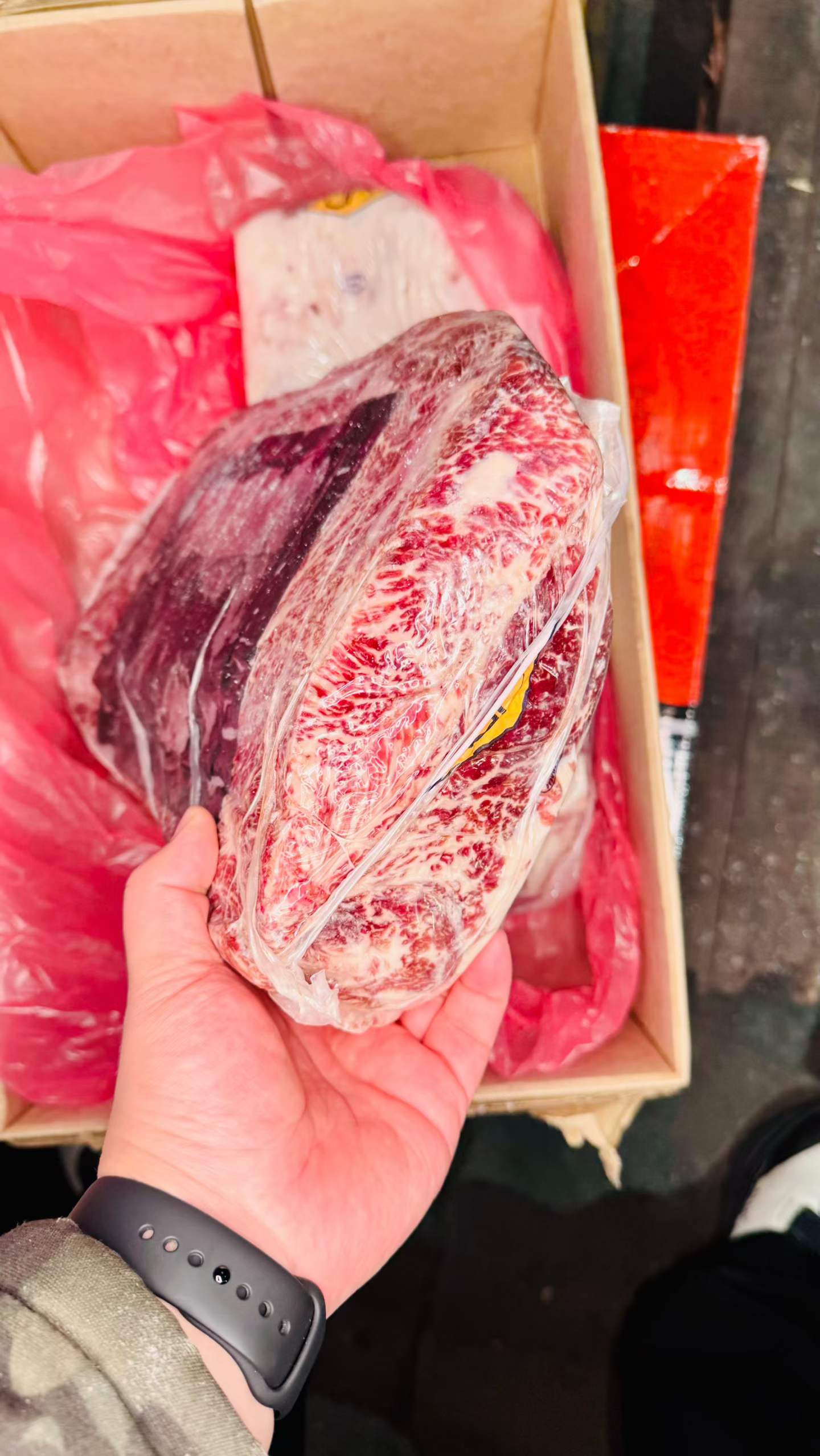
SANCHOKU HERITAGE · F1 WAGYU SB8–9 · archive view 1SANCHOKU HERITAGE · F1 WAGYU SB8–9 · archive view 2
SANCHOKU HERITAGE

F1 WAGYU SB8–9

Packaging label

The carton records CUBE ROLL 7R and F1 WAGYU SB8–9. Range labels stay ranges.

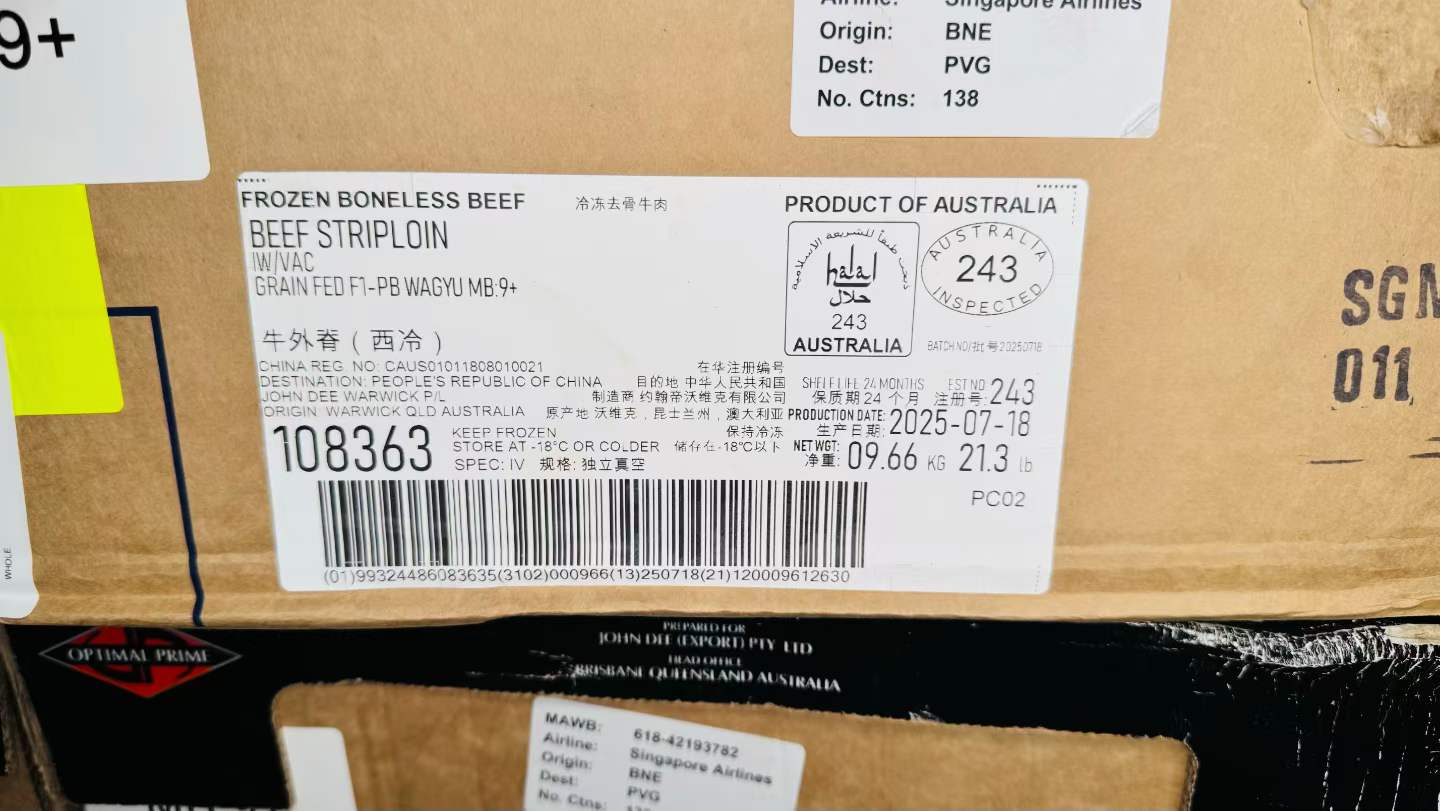
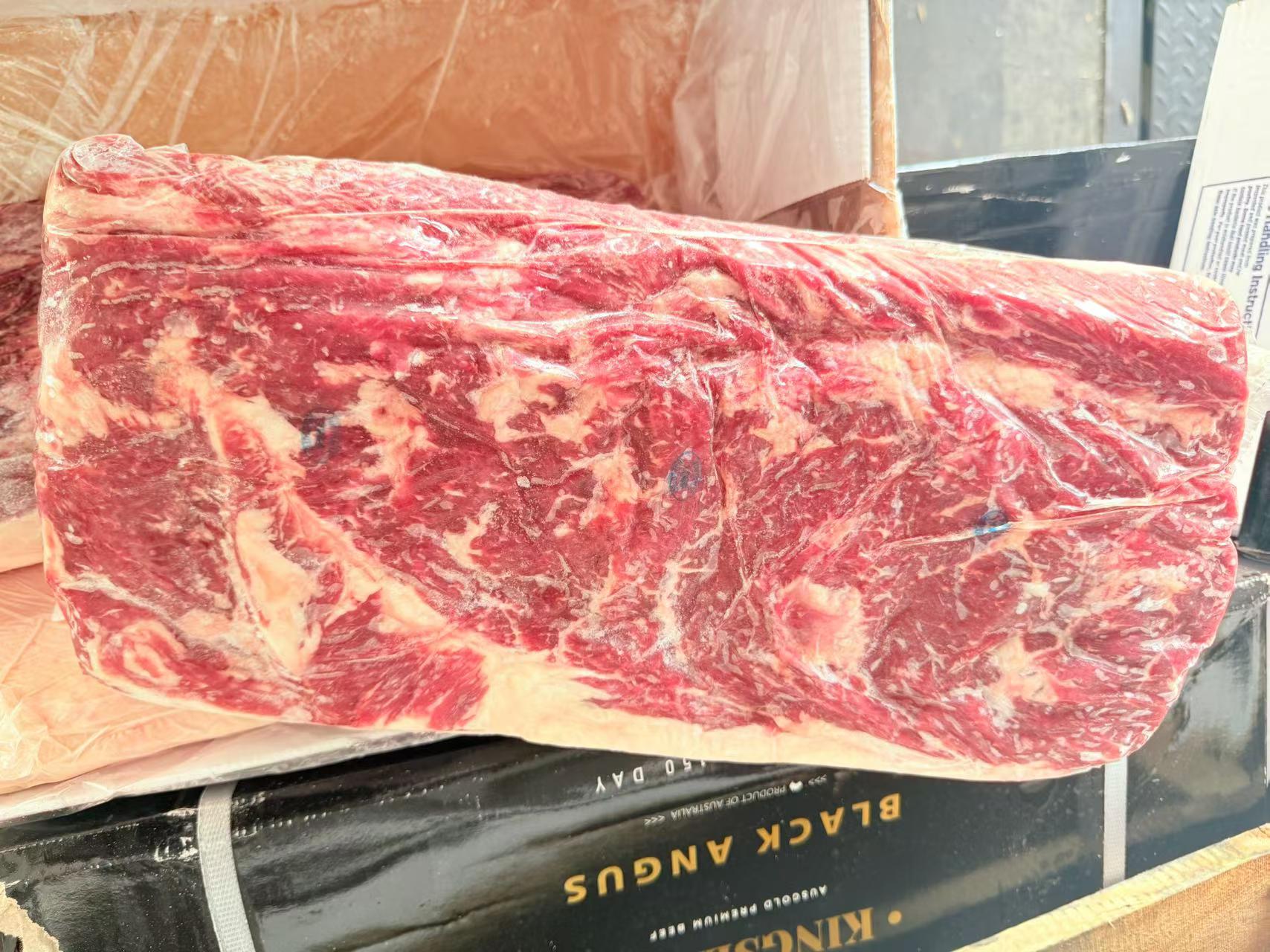
JOHN DEE · F1–PB WAGYU MB9+ · archive view 1JOHN DEE · F1–PB WAGYU MB9+ · archive view 2
JOHN DEE

F1–PB WAGYU MB9+

Packaging label

The factory carton uses MB9+. Retained as a brand label, not an AUS-MEAT score of 10 or a Japanese grade.

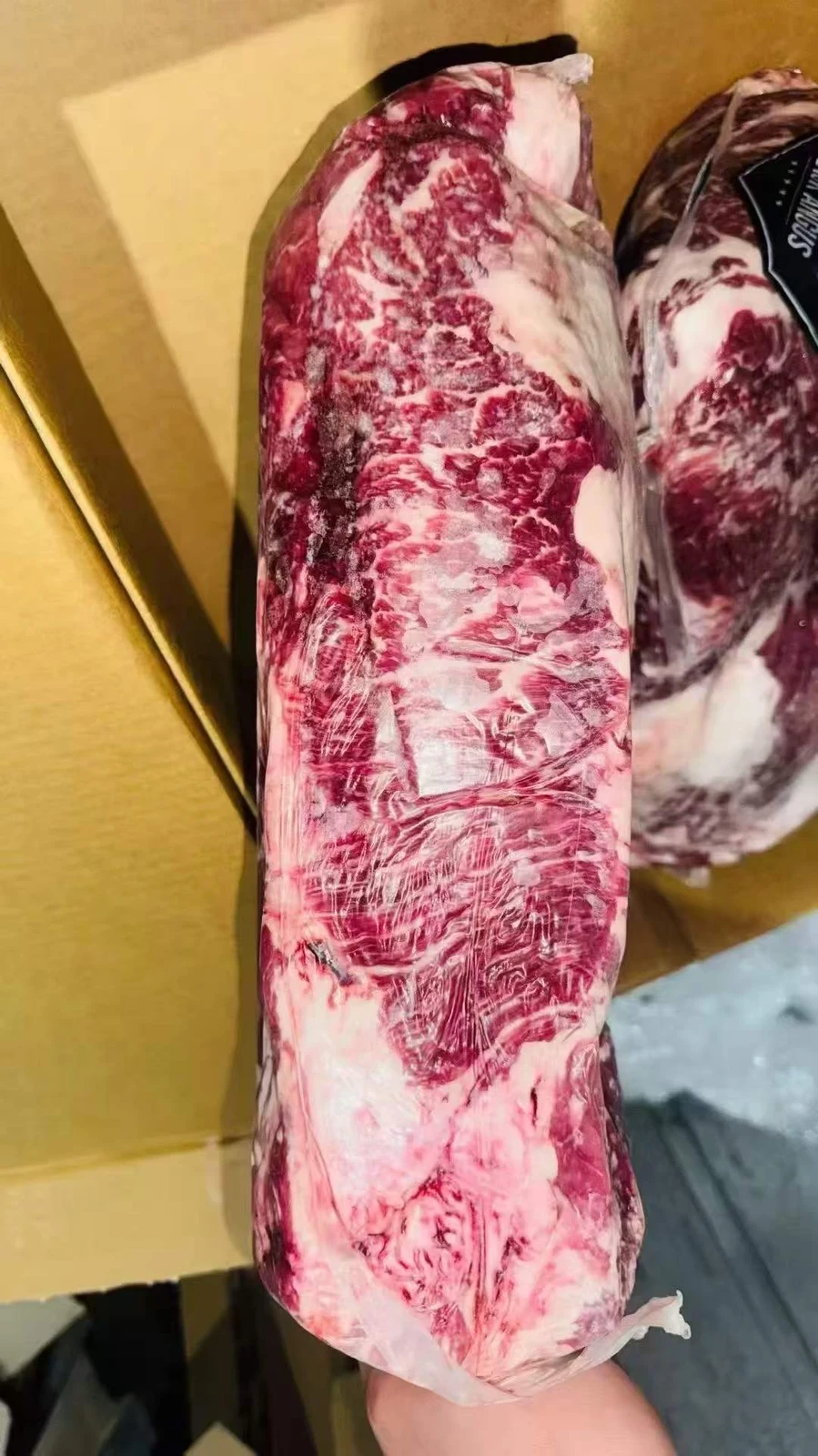
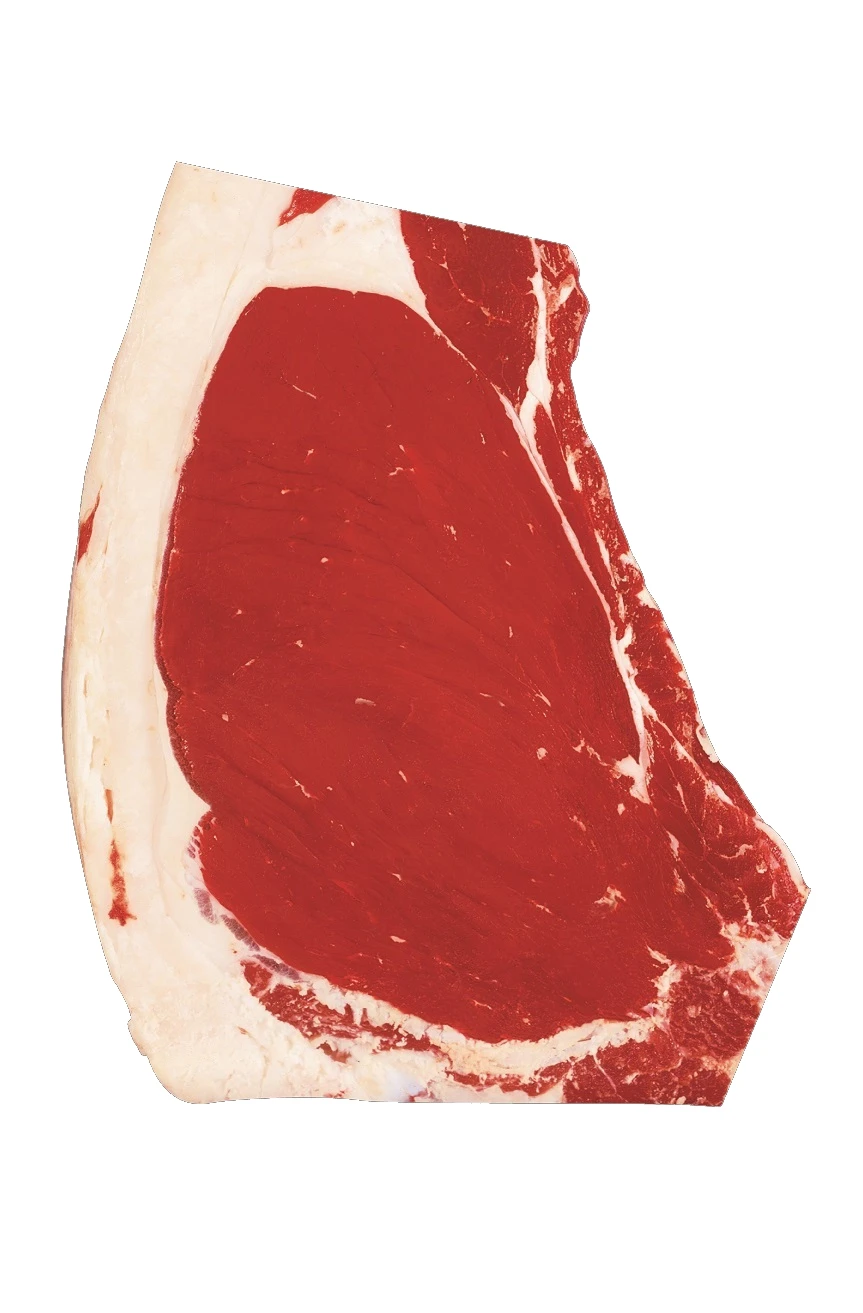
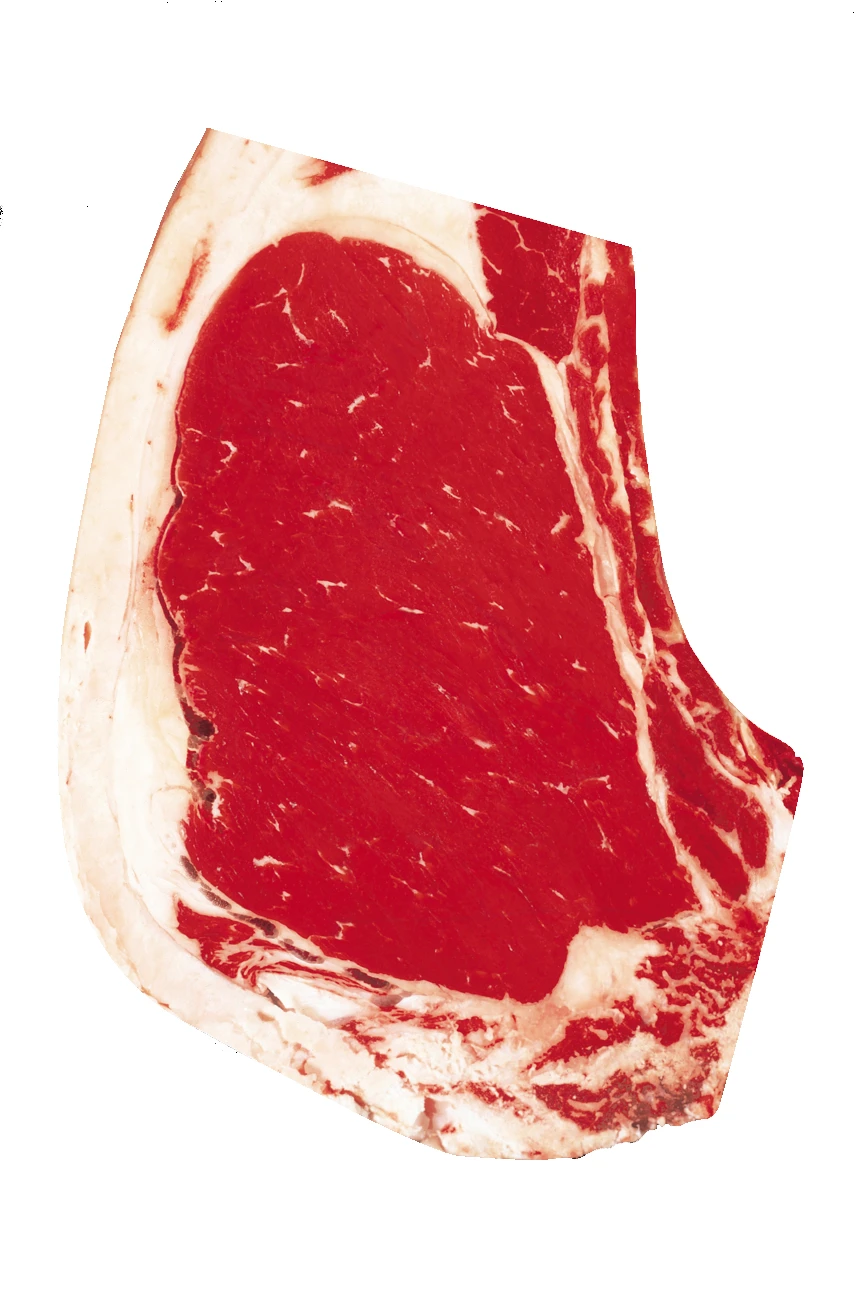
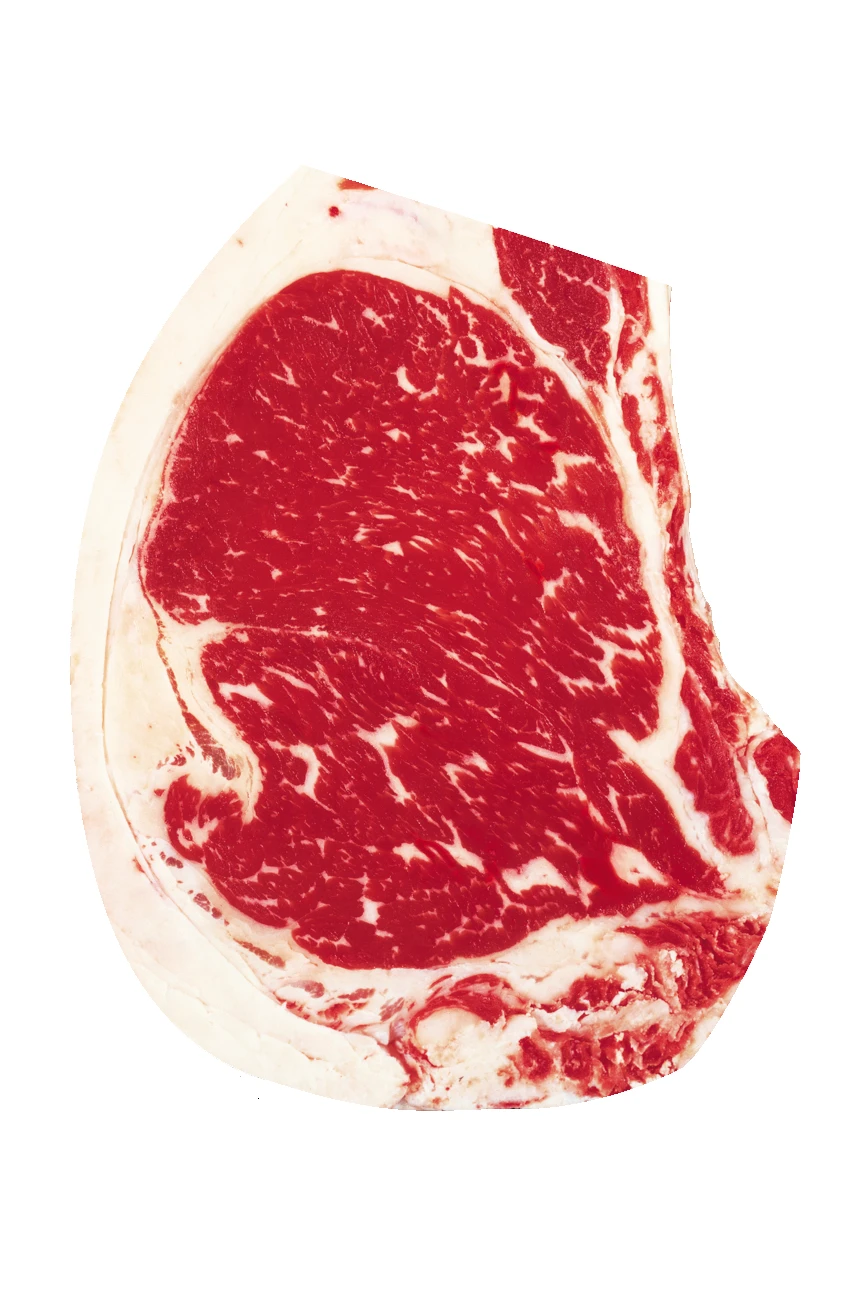
Angus · open six distinct label / supplier specifications +
KINGSLAND · 0–2 · supplier range · archive view 1KINGSLAND · 0–2 · supplier range · archive view 2
KINGSLAND

0–2 · supplier range

Supplier record · not a verified grade field

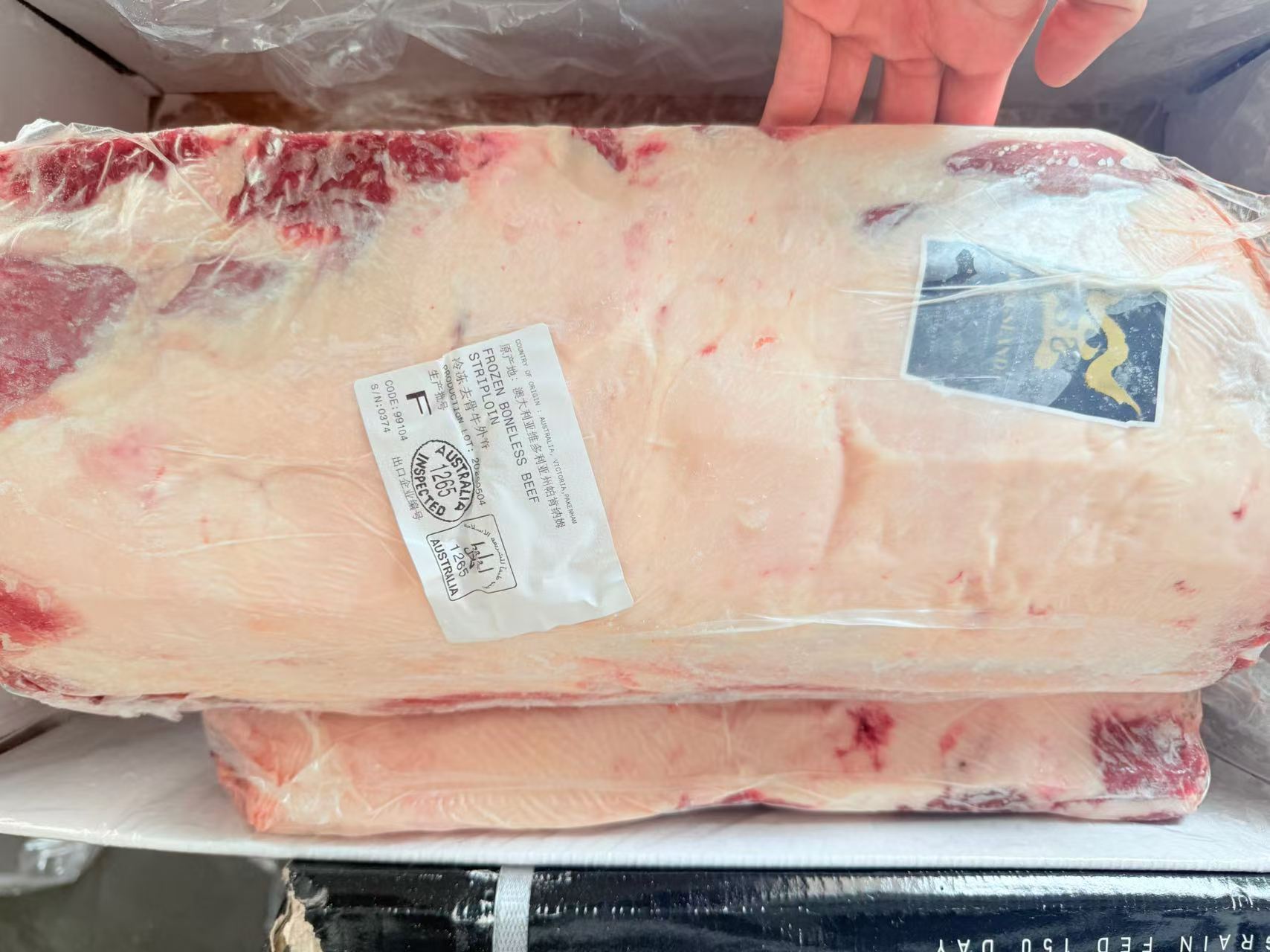
Black Angus and striploin are visible; 0–2 is the supplier’s archived range, not a legible grade field.

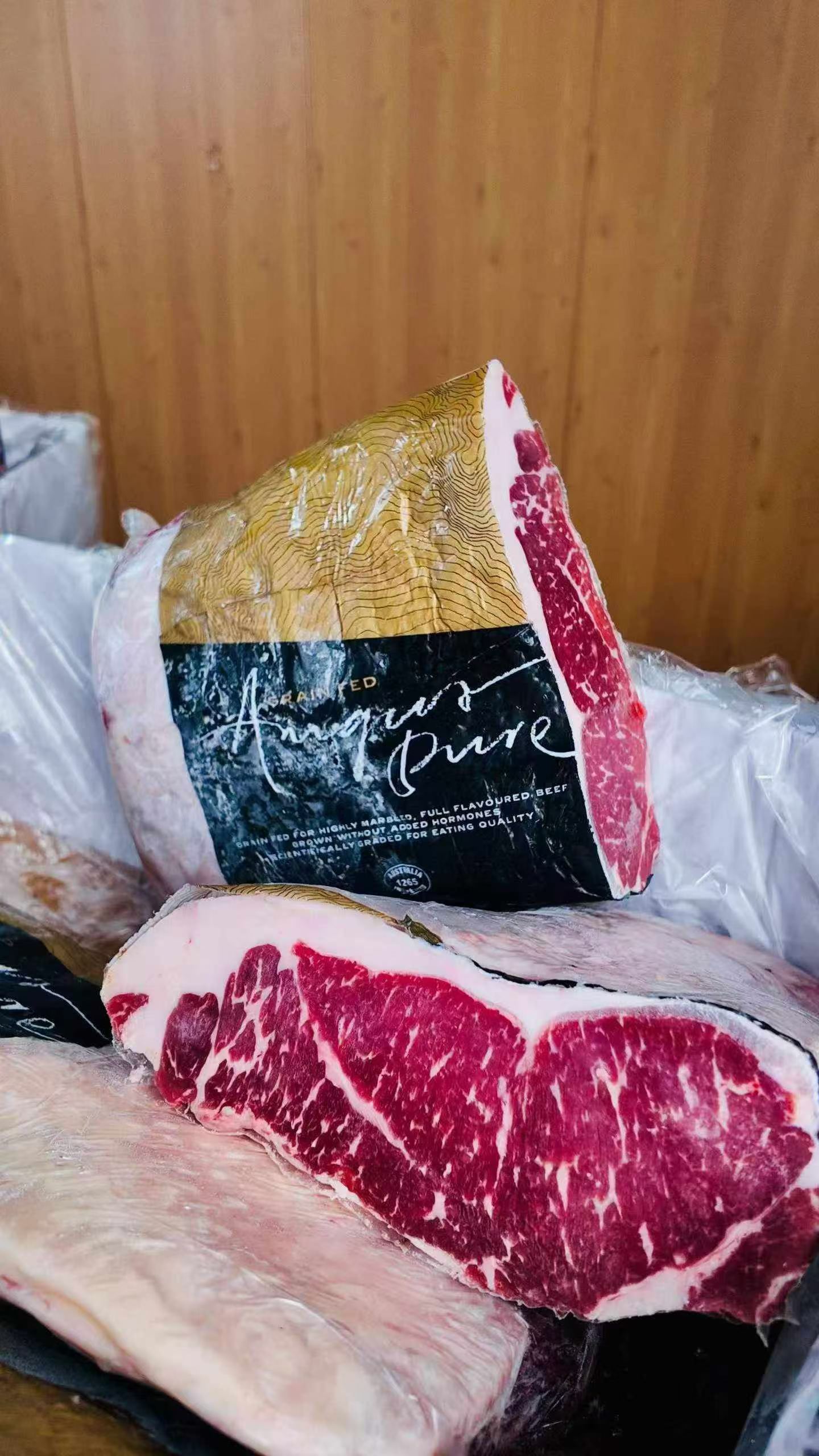
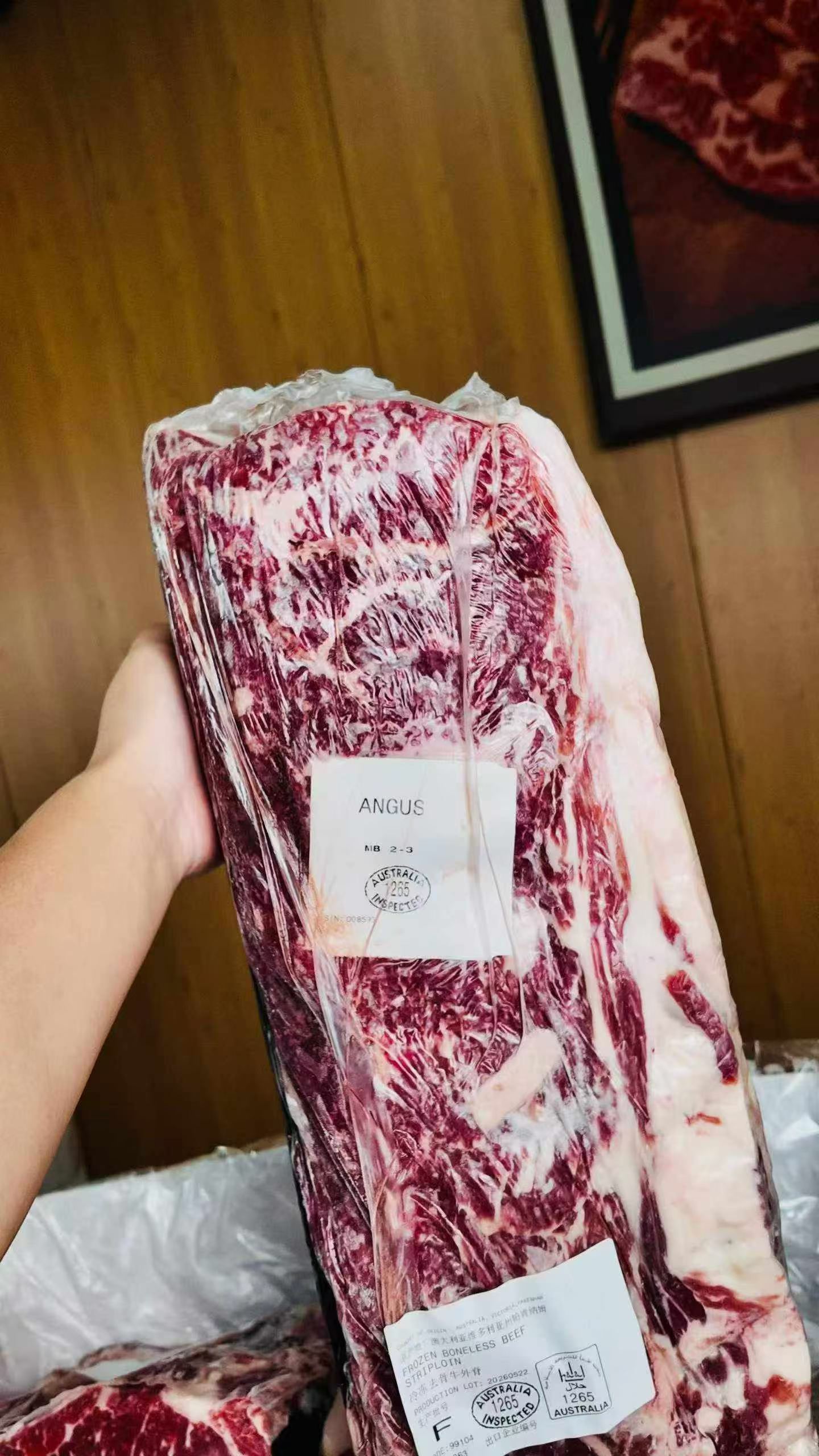
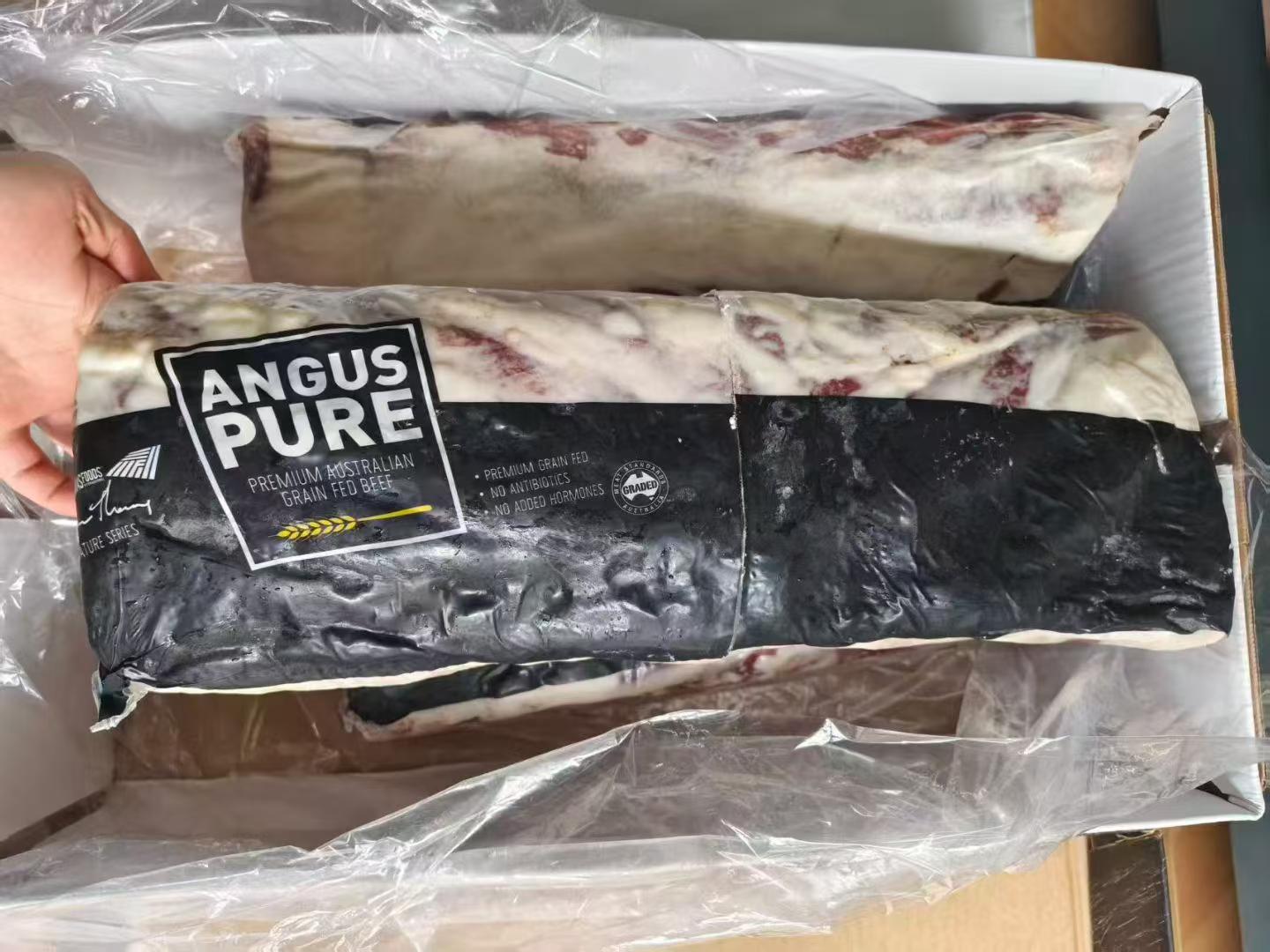
ANGUS PURE · ANGUS MB2–3 · archive view 1ANGUS PURE · ANGUS MB2–3 · archive view 2
ANGUS PURE

ANGUS MB2–3

Display card / sticker

The grade sticker reads ANGUS MB2–3; the product label identifies Australian striploin, plant 1265.

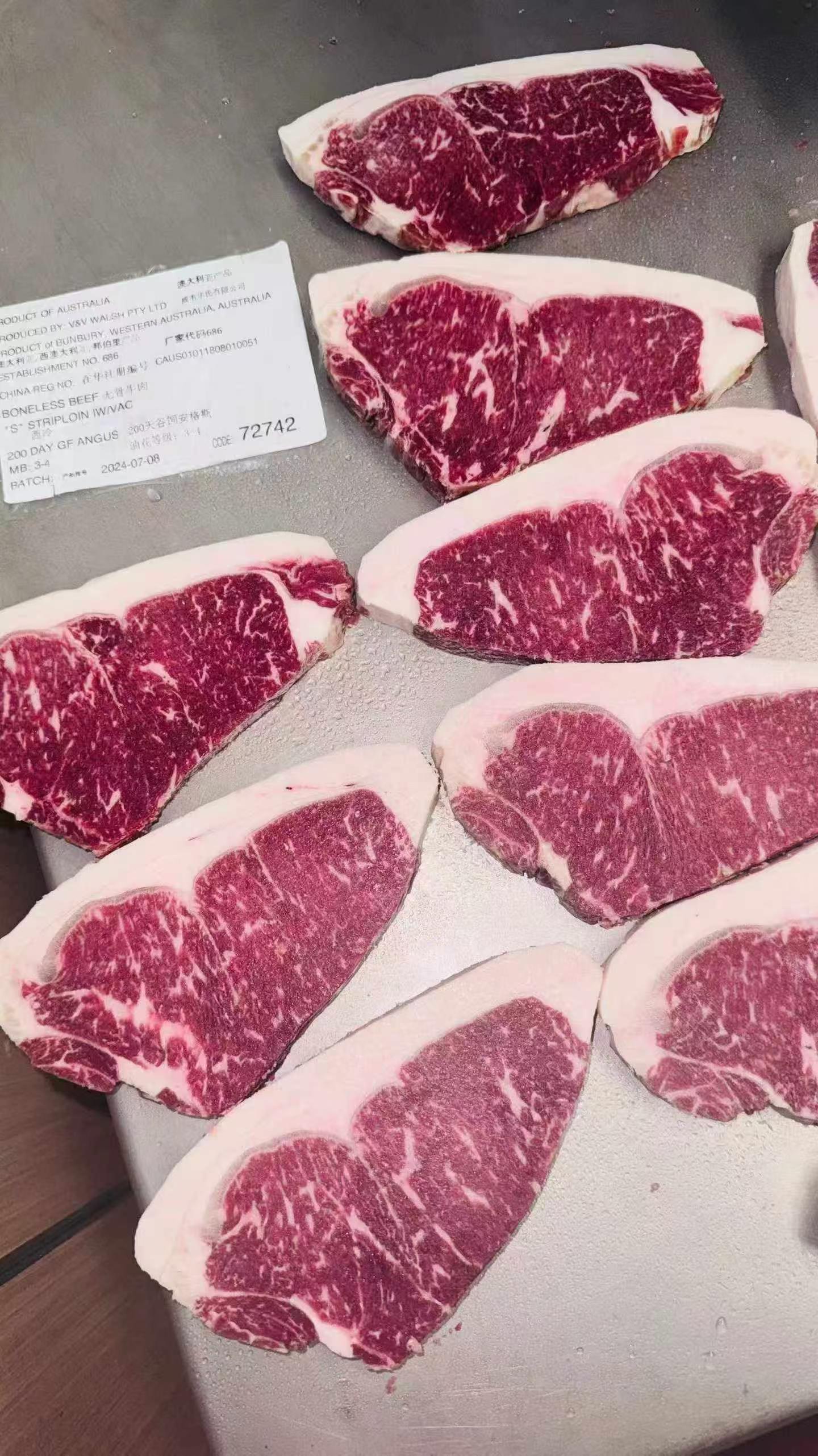
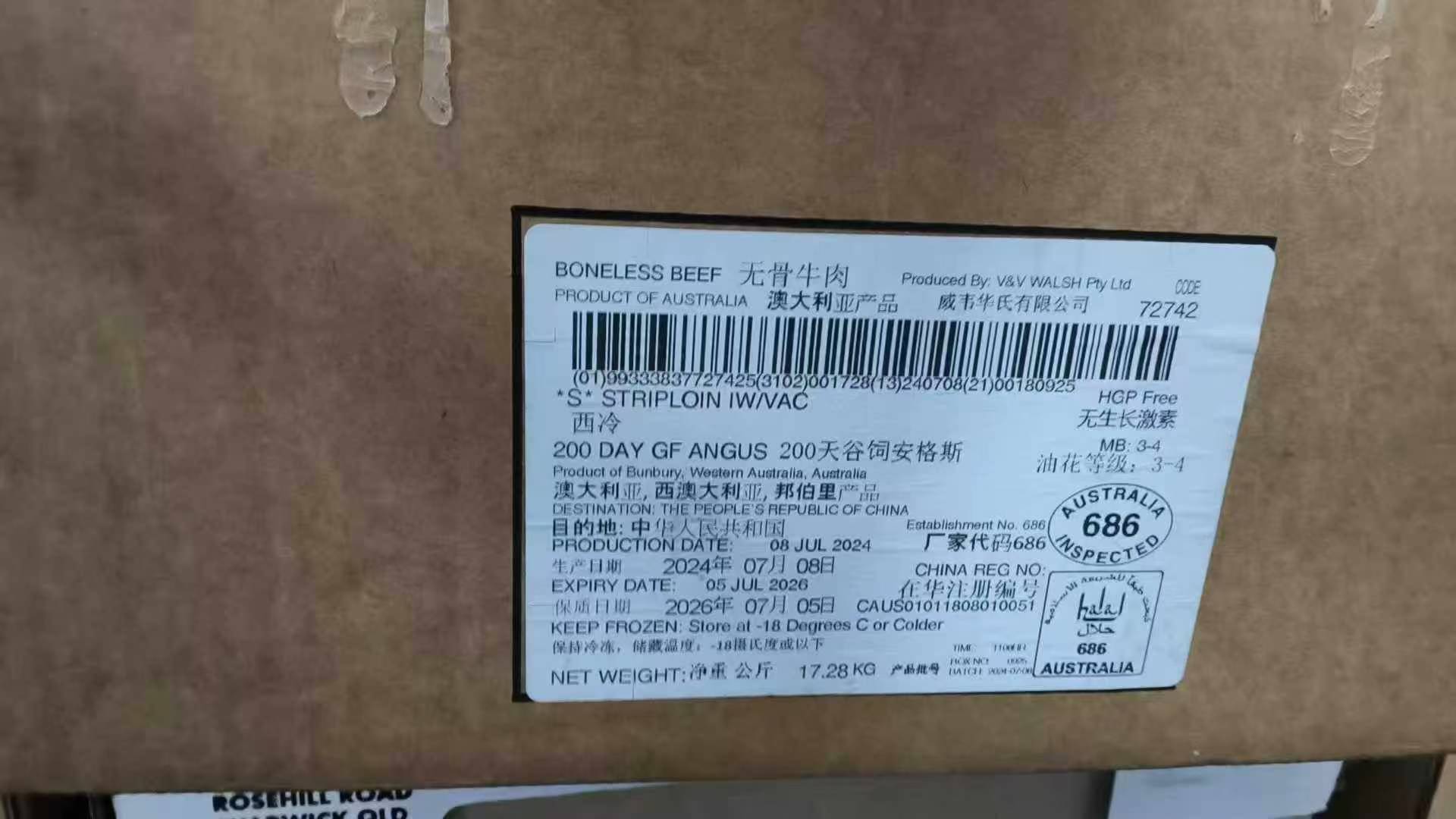
V&V WALSH · MB3–4 · archive view 1V&V WALSH · MB3–4 · archive view 2
V&V WALSH

MB3–4

Packaging label

The carton records S STRIPLOIN, 200 days and MB3–4, plant 686. The photo remains a range reference.

ANGUS RESERVE · MB3UP · archive view 1ANGUS RESERVE · MB3UP · archive view 2
ANGUS RESERVE

MB3UP

Packaging label

The package reads MB3UP. A minimum-grade label does not establish a specific higher score.

View this cut ↗
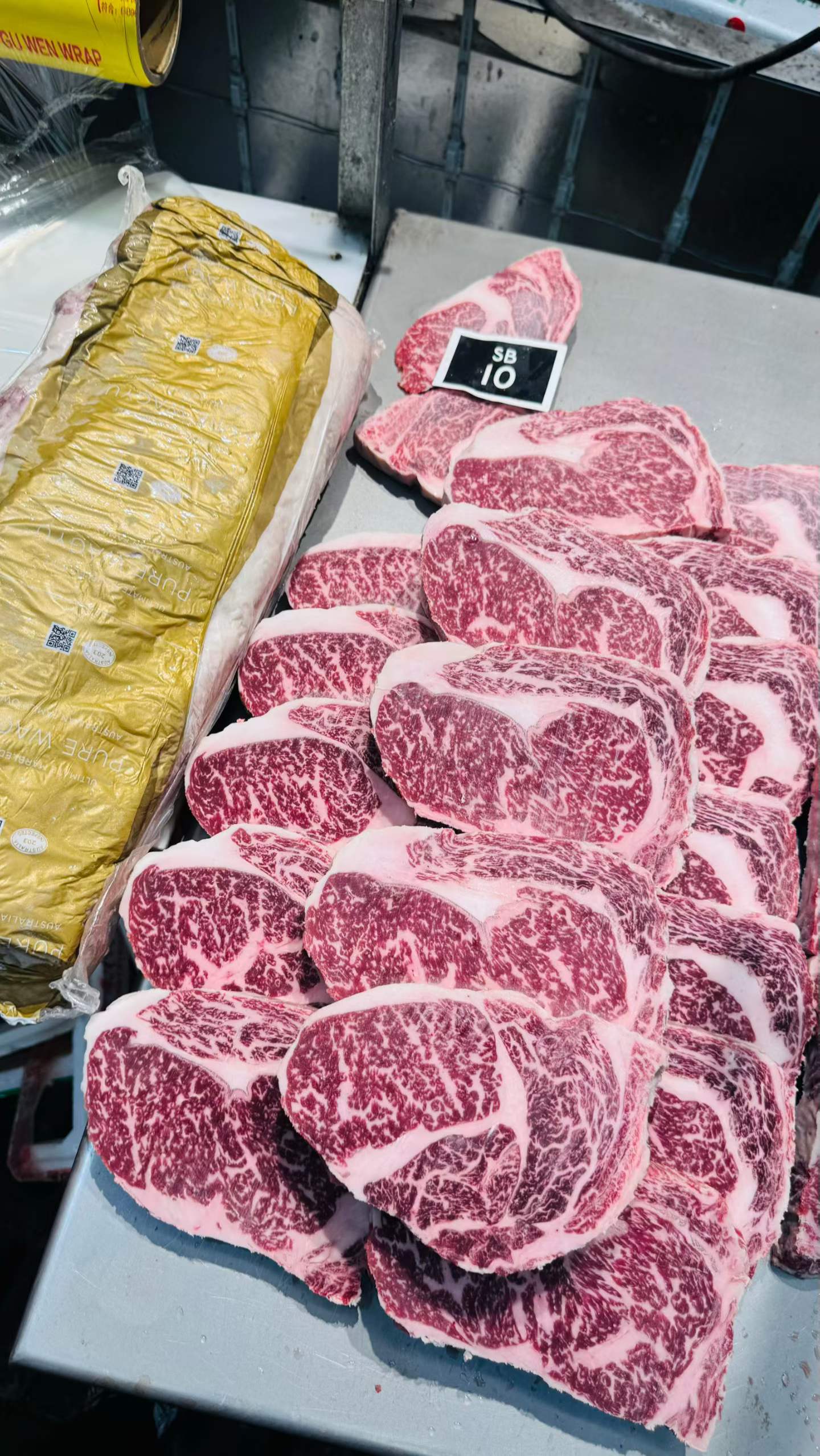
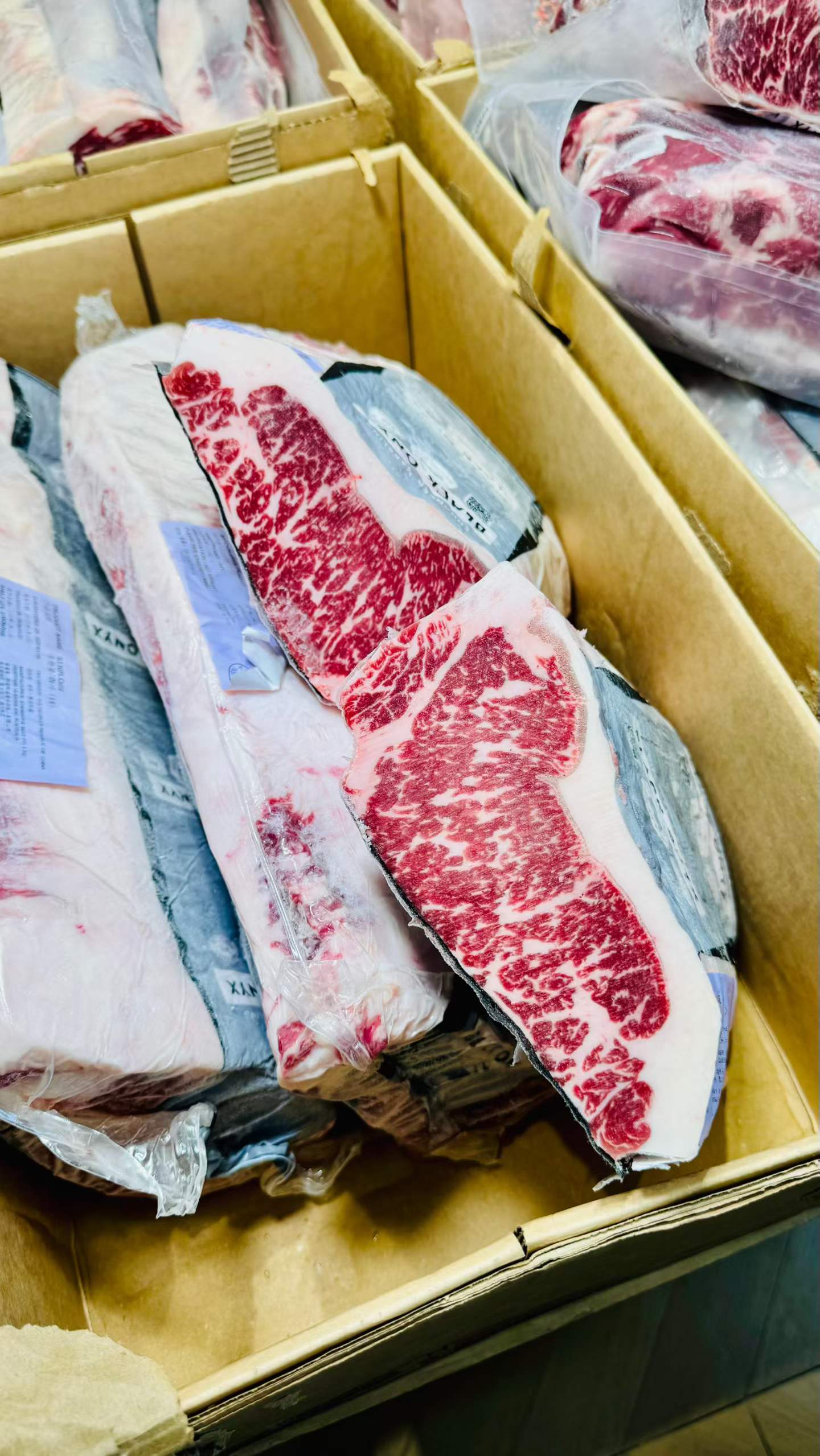
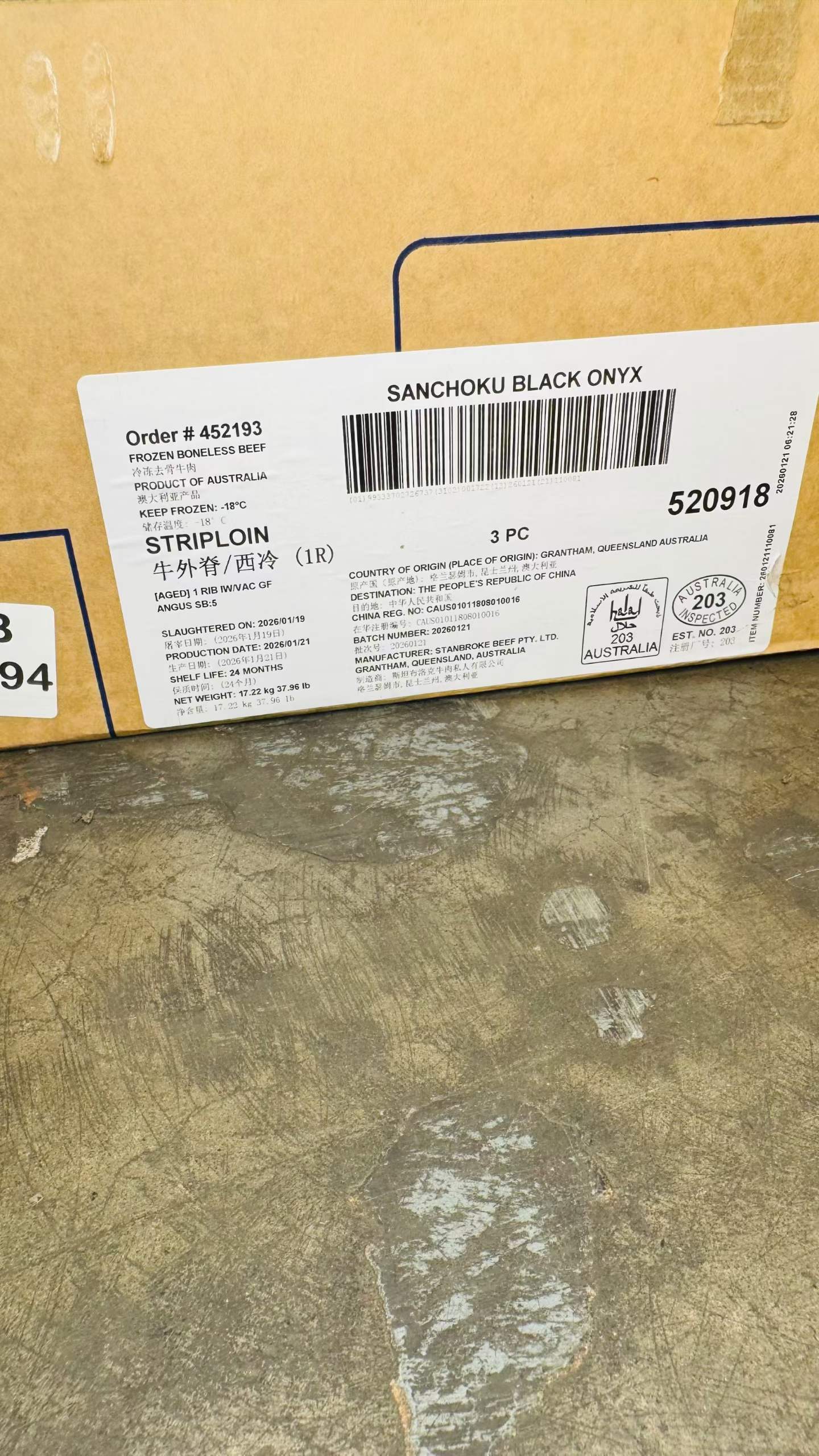
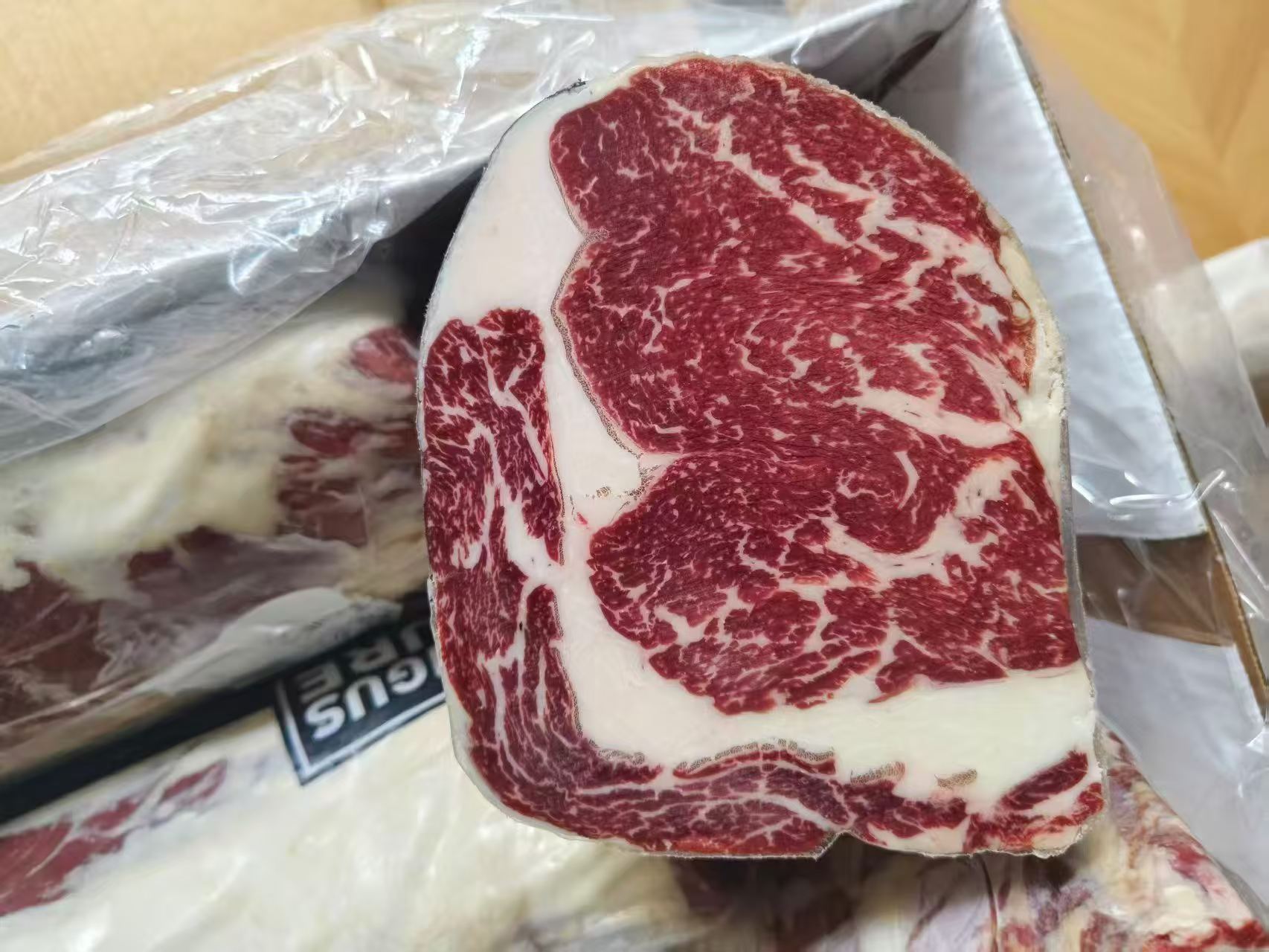
SANCHOKU BLACK ONYX · STANBROKE · ANGUS SB5 · archive view 1SANCHOKU BLACK ONYX · STANBROKE · ANGUS SB5 · archive view 2
SANCHOKU BLACK ONYX · STANBROKE

ANGUS SB5

Packaging label

Plant 203, ANGUS SB5. SB is retained exactly as labelled; this is not the Rangers Valley BLACK ONYX product.

ANGUS PURE · MB5+ · supplier record · archive view 1ANGUS PURE · MB5+ · supplier record · archive view 2
ANGUS PURE

MB5+ · supplier record

Supplier record · not a verified grade field

The Angus brand is visible, but MB5+ is a supplier description. No exact higher score is inferred.

US

United States · USDA quality grades

USDA quality grading considers maturity and marbling. Select, Choice and Prime are the familiar retail grades—not Angus bloodline categories. Yield grading is a different assessment.

USDA slight official marbling reference
SelectSlight · minimum marbling category
USDA small official marbling reference
ChoiceSmall · minimum marbling category
USDA slightly-abundant official marbling reference
PrimeSlightly Abundant · minimum category

Source: USDA Agricultural Marketing Service marbling photographs. These illustrate marbling thresholds, not every condition for a full quality grade, and are not photos of our stock. Standard, Commercial, Utility, Cutter and Canner are other USDA quality grades.

USDA AMS · Official references ↗
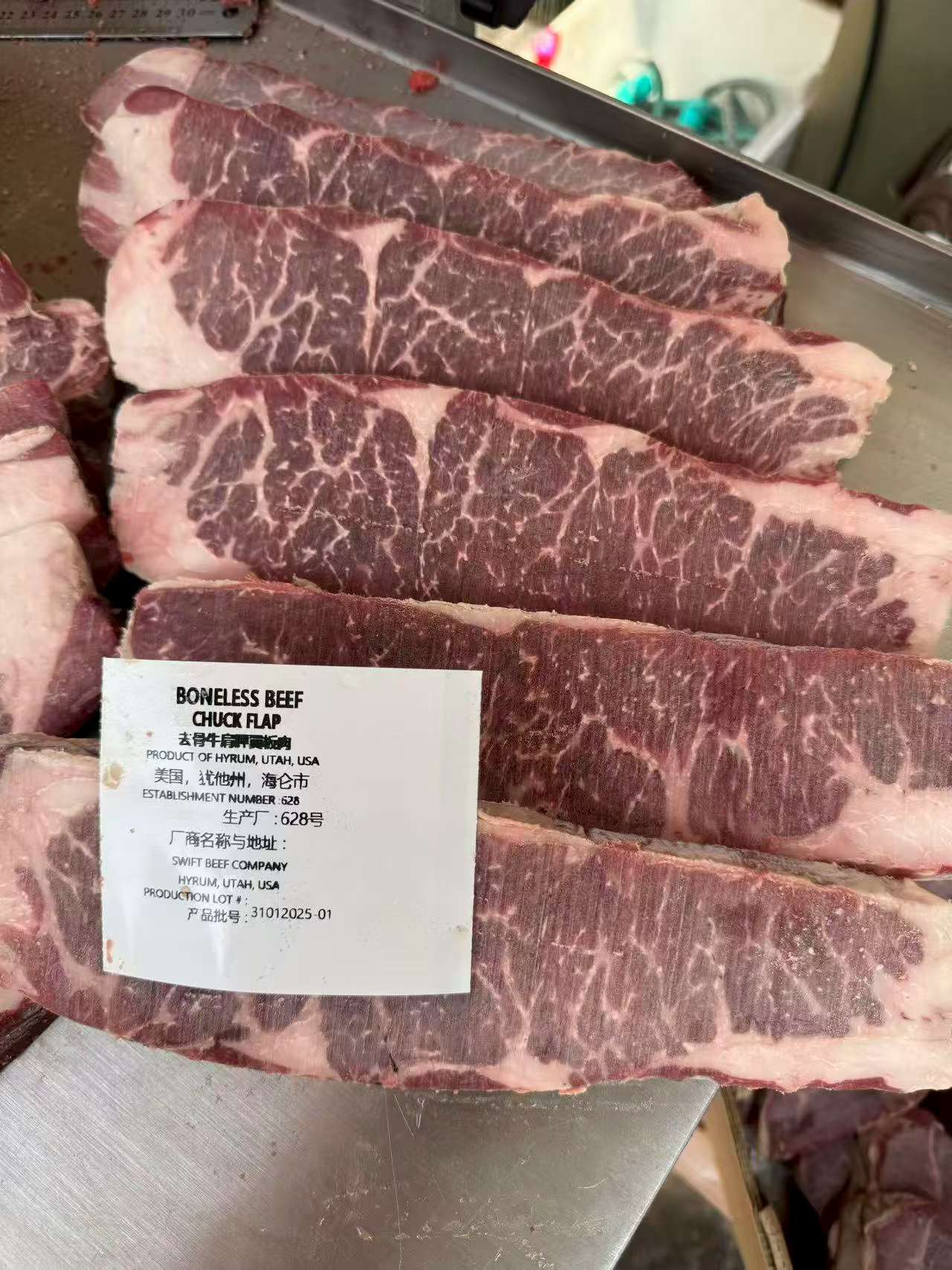
Our archive · USDA Choice and Prime labels +
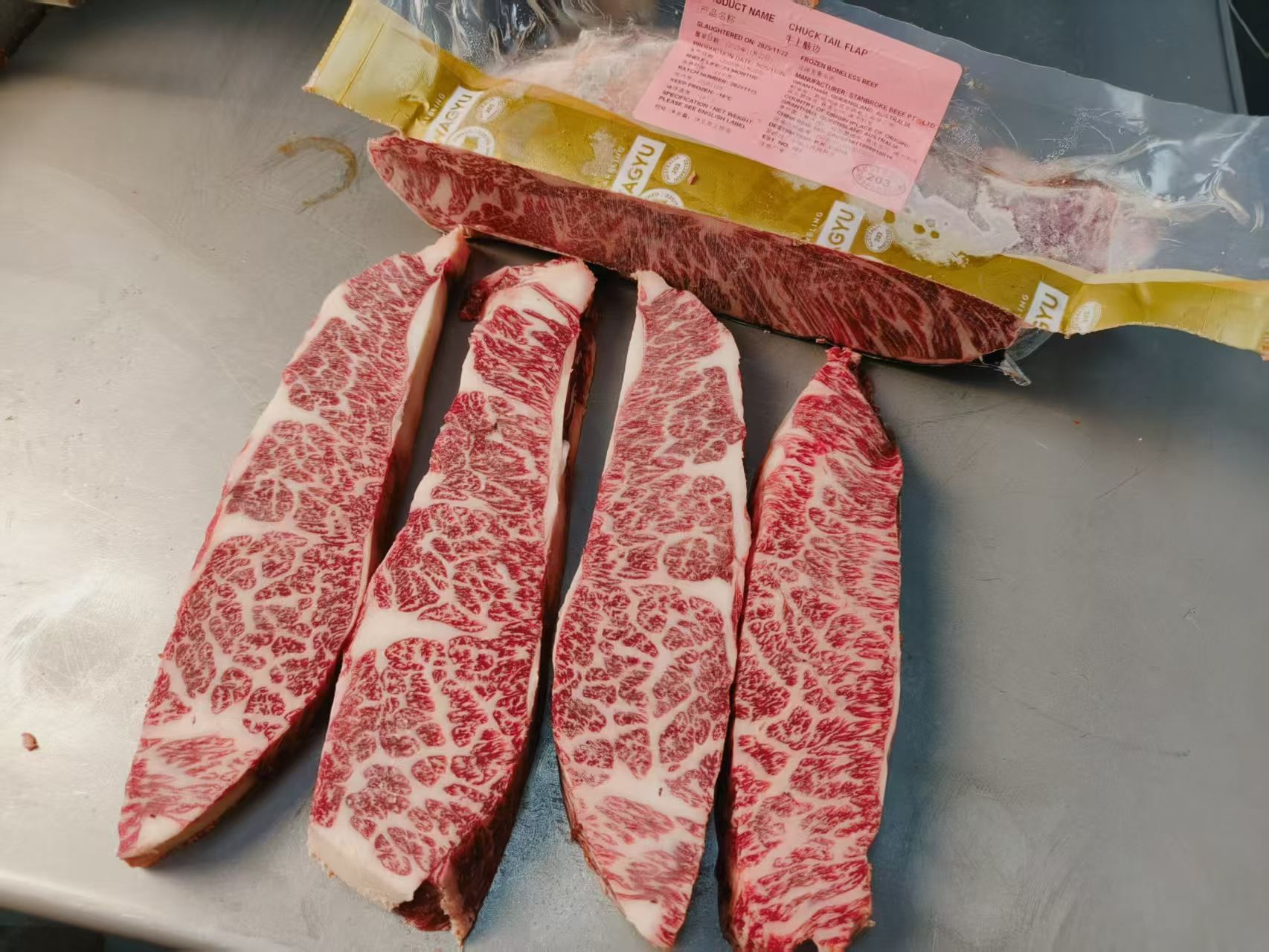
SWIFT · USDA Choice · archive view 1SWIFT · USDA Choice · archive view 2
SWIFT

USDA Choice

Packaging label

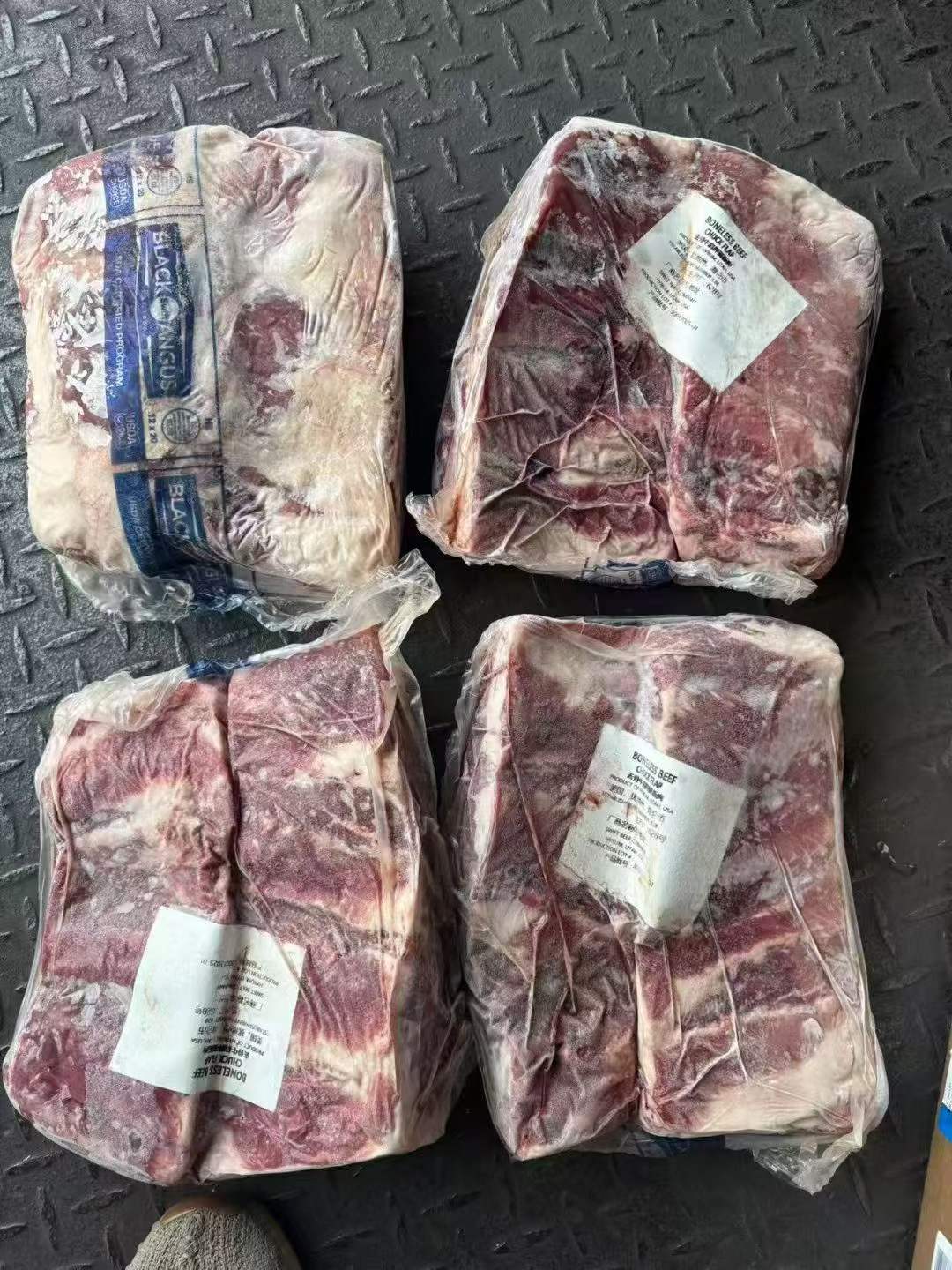
Black Angus and USDA Choice are visible. These photos show chuck flap, not a striploin or ribeye offer.

View this cut ↗
CREEKSTONE FARMS · USDA Prime · archive view 1CREEKSTONE FARMS · USDA Prime · archive view 2
CREEKSTONE FARMS

USDA Prime

Packaging label

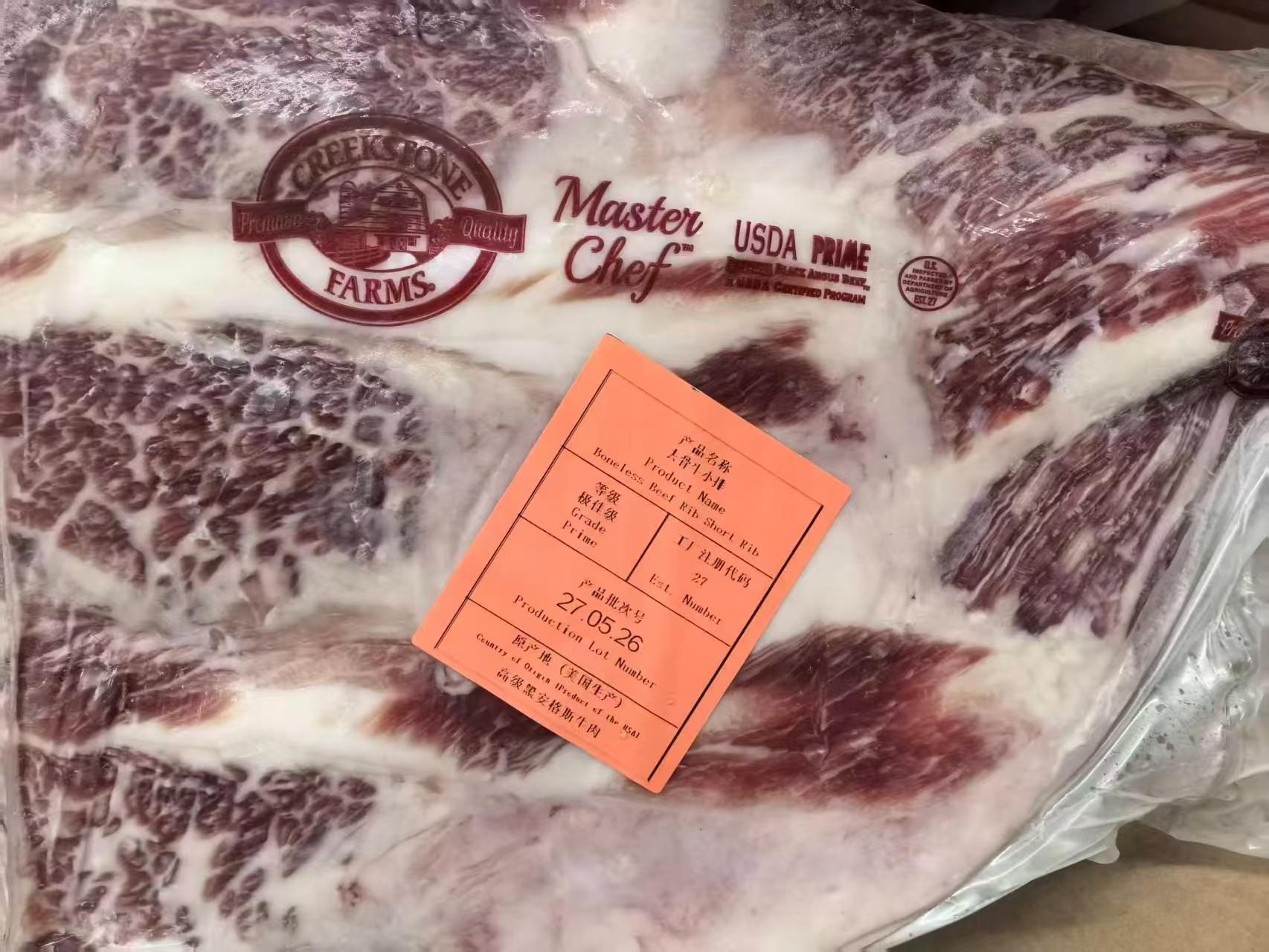
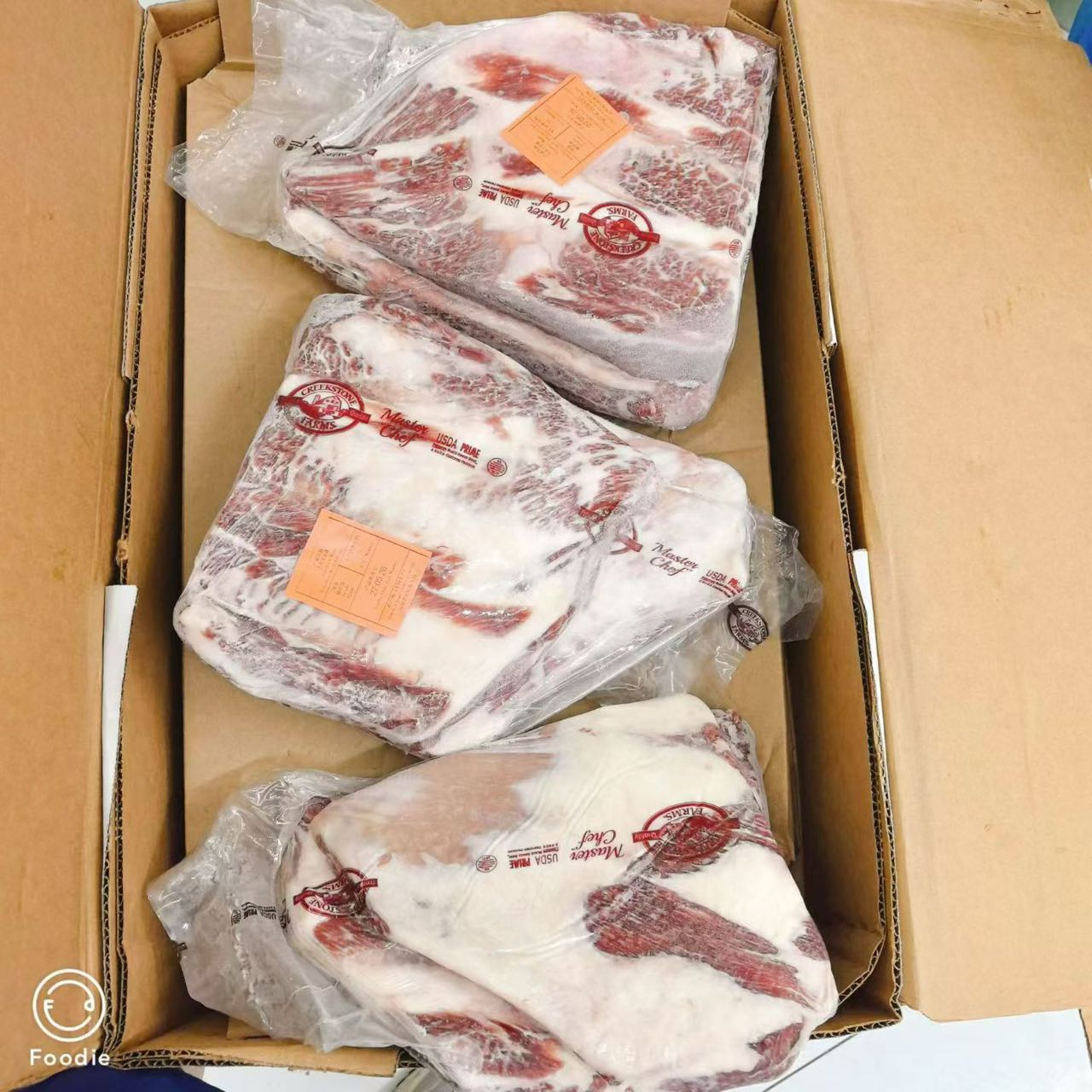
Black Angus and USDA Prime are visible on the short-rib packaging. This is a different-cut grading reference.

View this cut ↗
JP

Japan · A5 has two dimensions

A / B / C

Yield grade

A, B and C classify yield. A is not a genetic percentage, and it does not mean “more marbling”.

1 / 2 / 3 / 4 / 5

Meat-quality grade

The lowest result across marbling, meat colour/brightness, firmness/texture and fat colour/lustre/quality sets the overall quality grade. A5 combines yield A with quality 5.

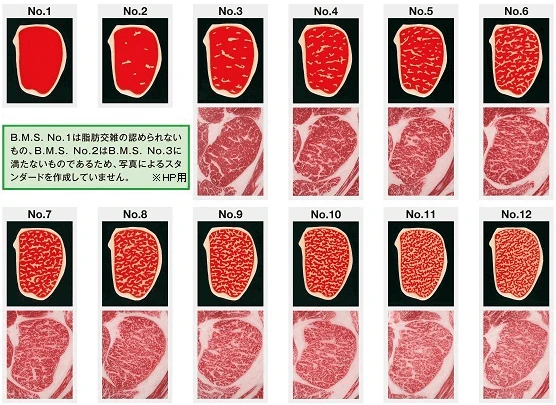
Japan Meat Grading Association official BMS 1–12 reference illustration
Source: Japan Meat Grading Association (JMGA) / 日本食肉格付協会. The published reference differs from actual standards in size and colour; assessment uses its photographic marbling standard.

BMS is the marbling criterion.

Quality criterion 1
BMS 1
Quality criterion 2
BMS 2
Quality criterion 3
BMS 3–4
Quality criterion 4
BMS 5–7
Quality criterion 5
BMS 8–12

BMS 8 alone does not certify A5: the other three quality criteria and yield also matter. No Japanese product batch is represented by this educational image.

JMGA · Beef carcass trading standard ↗
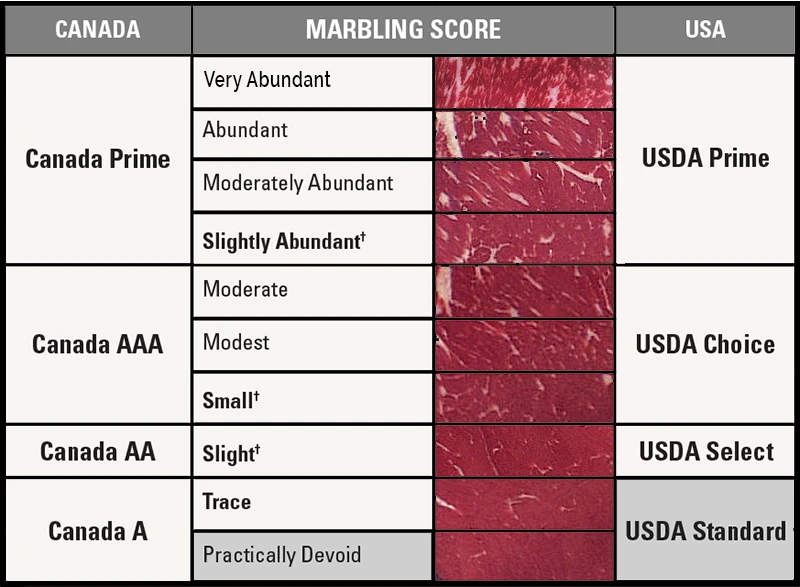
CA

Canada · A, AA, AAA and Prime

Canada ATrace
Canada AASlight
Canada AAASmall
Canada PrimeSlightly Abundant

These are the four youthful high-quality Canadian grade categories and their marbling reference categories. Colour, maturity and fat attributes also matter. The broader Canadian system includes additional categories; this is not its entire grade list.

Canada and the US share a basis for marbling photographs, but Canadian beef retains Canadian grading identification. Similar words do not authorise a USDA claim.

Canadian Beef Grading Agency · Official marbling chart and criteria ↗
Canadian Beef Grading Agency published marbling reference photographs
Source: Canadian Beef Grading Agency, 2026 chart; reproductions of USDA marbling photographs. Reference material, not our product inventory.
RU

Russia · identify the brand’s scheme

SelectChoiceTop ChoicePrime

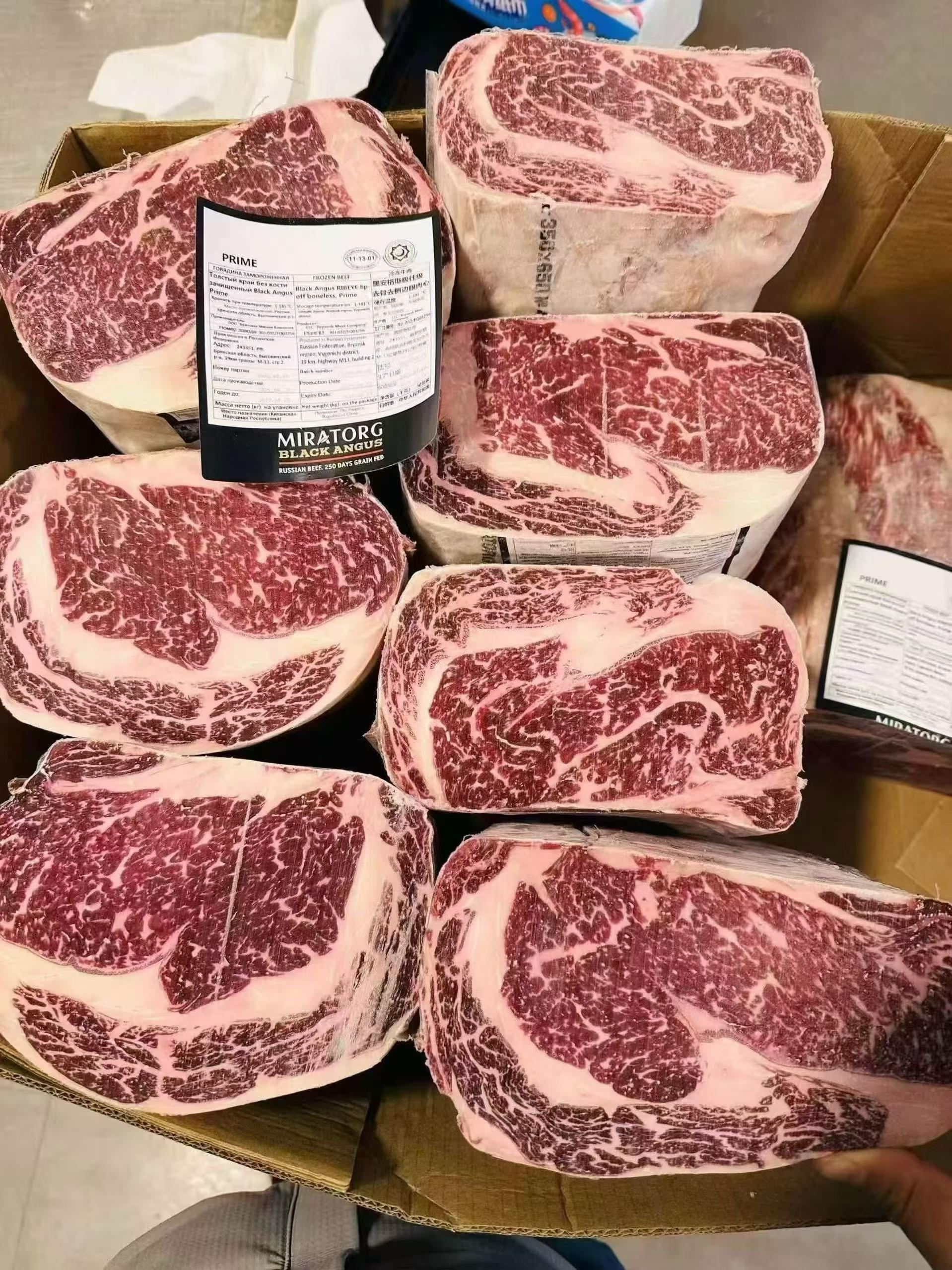
These names appear in MIRATORG’s Black Angus range. Treat them as that Russian brand’s designations—not USDA certification, and not proof that all Russian beef follows one identical system.

MIRATORG · Black Angus ↗
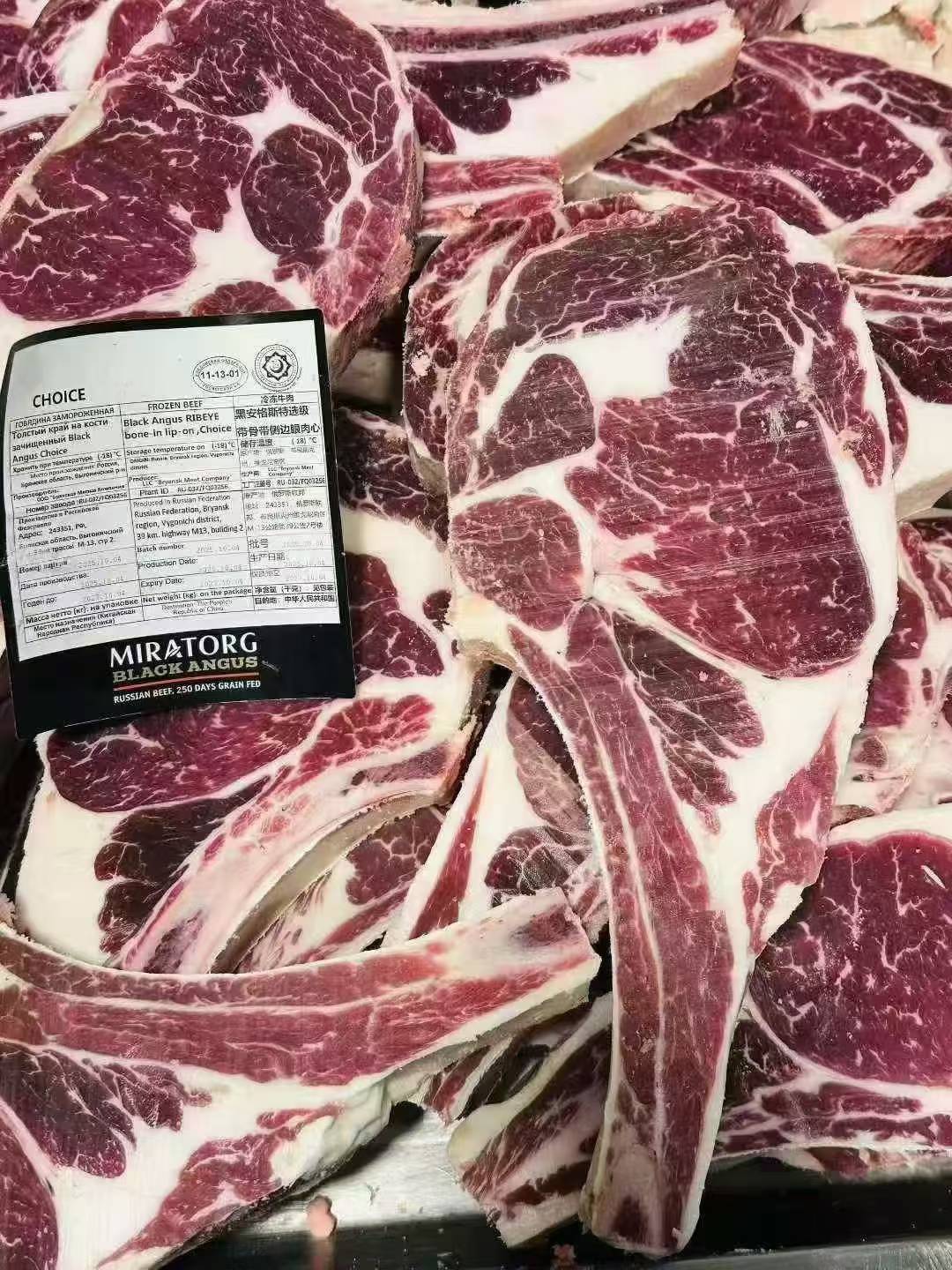
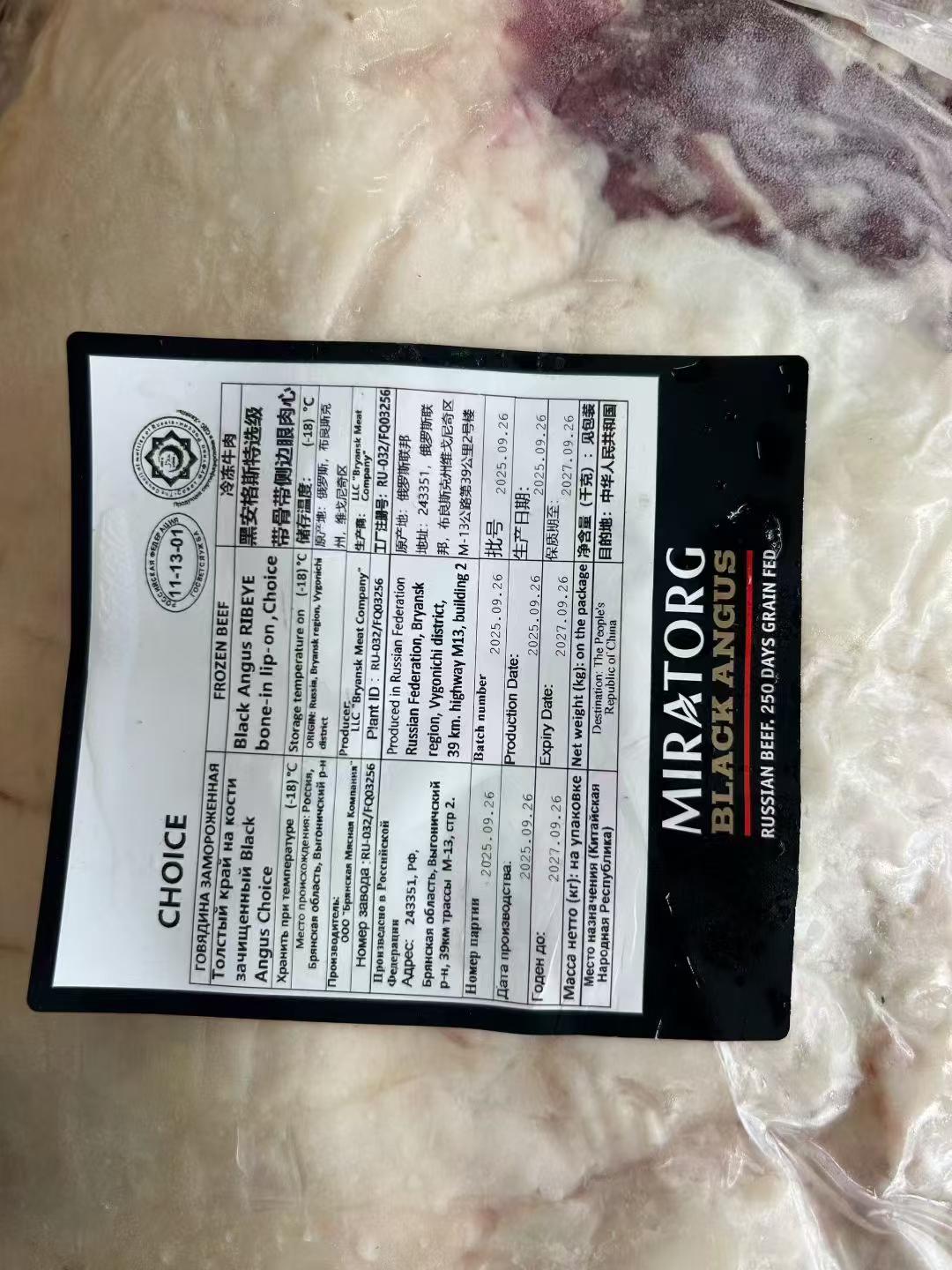
MIRATORG · Choice · 特选级 · archive view 1MIRATORG · Choice · 特选级 · archive view 2
MIRATORG

Choice · 特选级

Packaging label

The Russian label reads Choice / 特选级 and BONE-IN LIP-ON RIBEYE. It is not USDA-certified or a boneless ribeye sample.

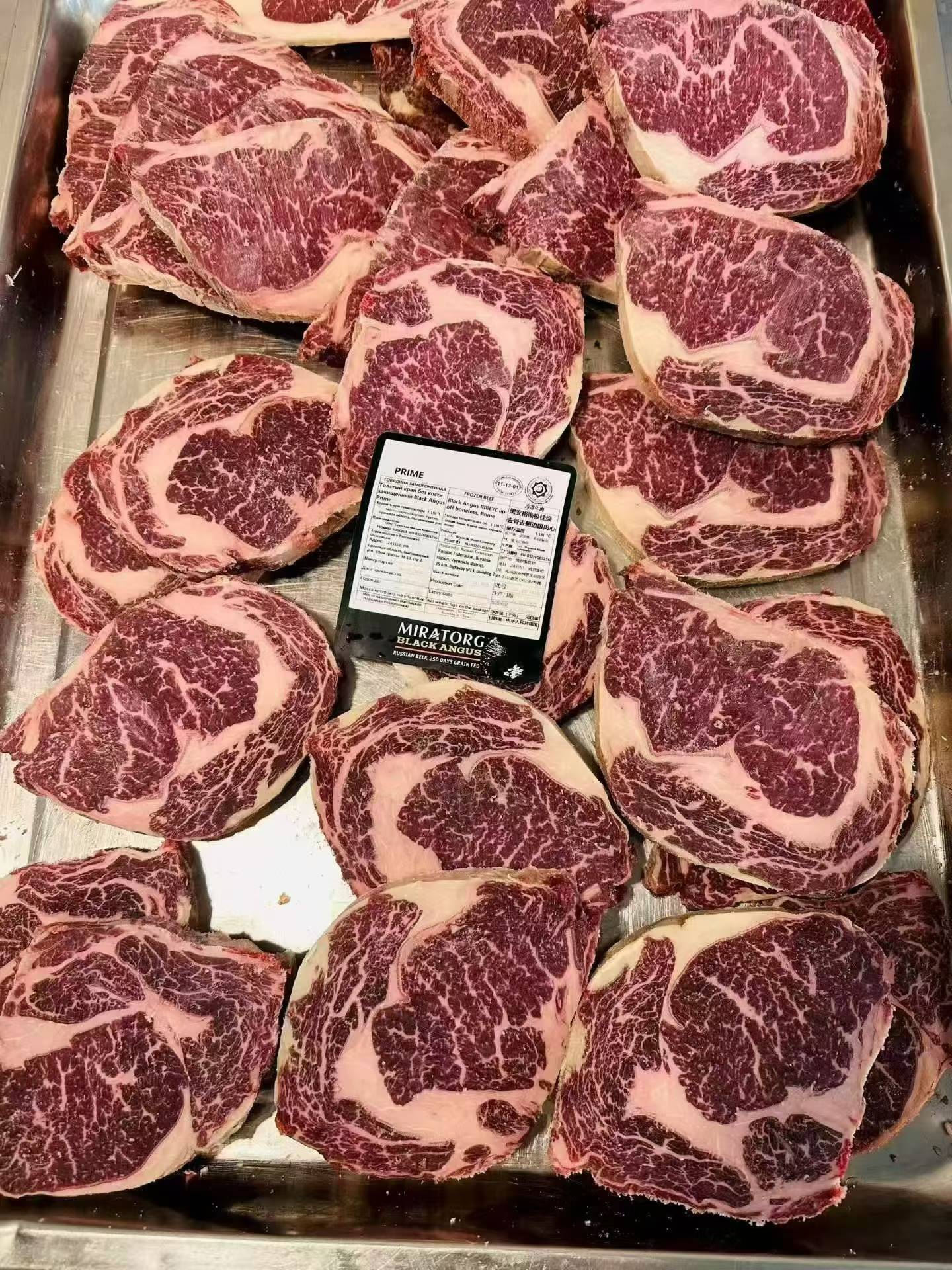
MIRATORG · Prime · archive view 1MIRATORG · Prime · archive view 2
MIRATORG

Prime

Packaging label

MIRATORG’s Russian Prime designation is visible. Similar grade names do not make this a USDA-certified product.

View this cut ↗
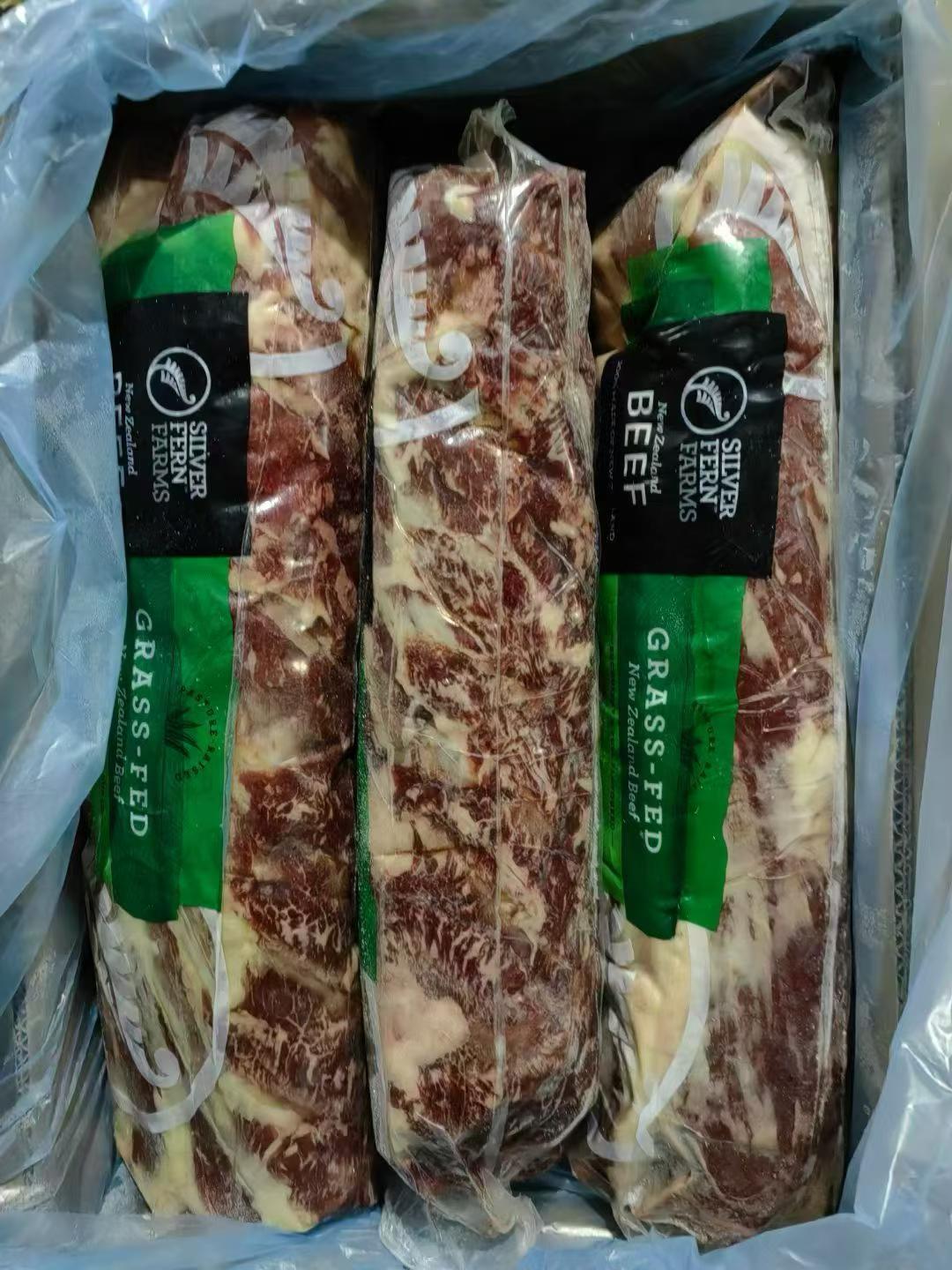
NZ

New Zealand · feeding is not grading

Grass-fed

A production-system claim. It does not tell you an exact marbling score or automatically mean “leaner is better”.

Programme specifications

Read the processor’s eating-quality selection and carcass specification separately. Silver Fern Farms’ grass-fed story belongs to its programme; it is not a national M0–M9 ladder.

Silver Fern Farms · Grass-fed ↗
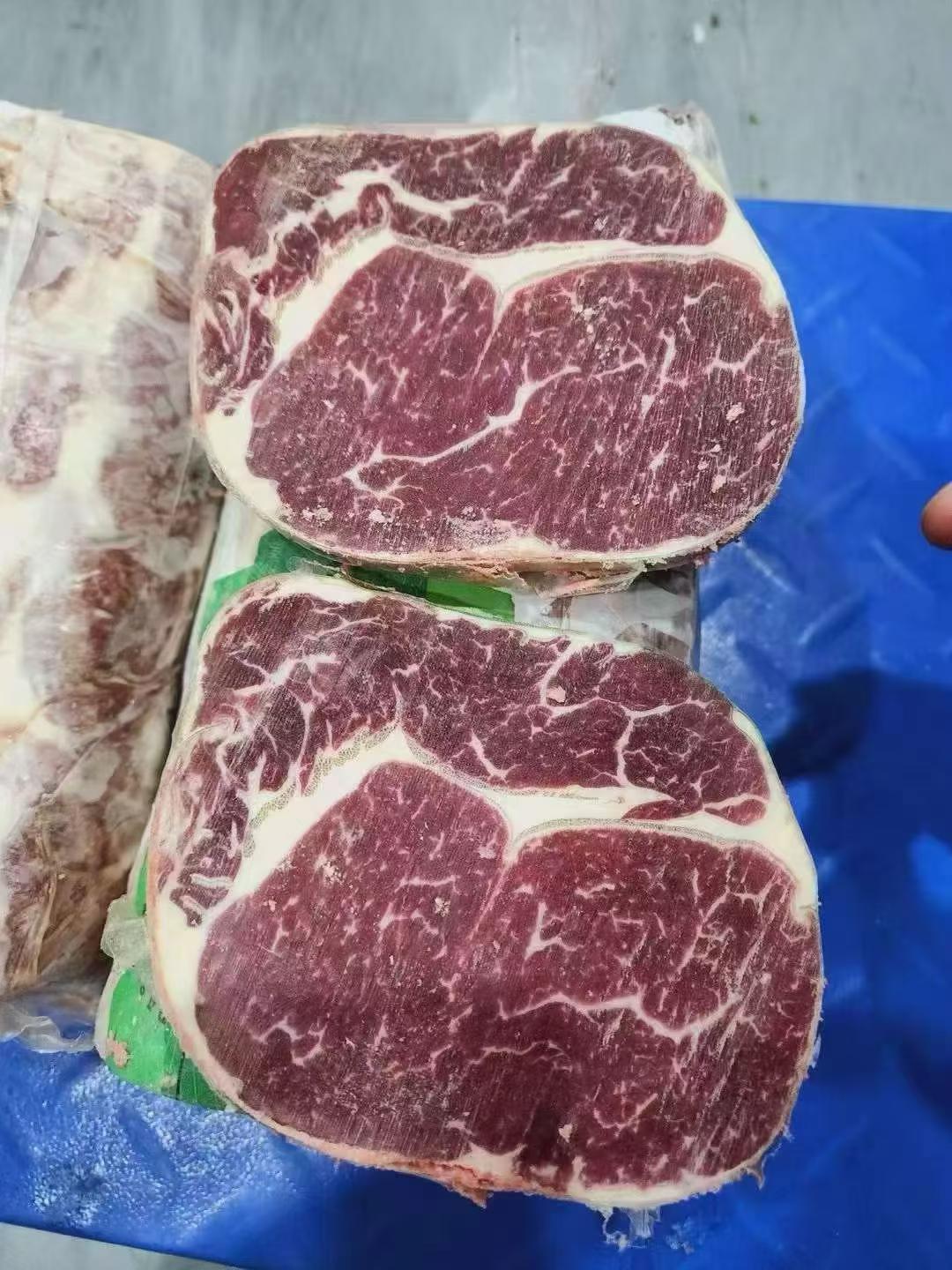
SILVER FERN FARMS · Grass-fed · archive view 1SILVER FERN FARMS · Grass-fed · archive view 2
SILVER FERN FARMS

Grass-fed

Supplier record · not a verified grade field

Grass-fed is visible; ribeye is the supplier’s description. Feeding style is not a marbling grade.

View this cut ↗
EU

European Union · shape and fat cover

CONFORMATION
SEUROP

Carcass conformation describes muscle development and profiles, from S to P.

FAT COVER
12345

Fat-cover classes 1–5 describe external fat coverage. They do not measure intramuscular marbling like a BMS score.

Animal category is another field. An EU A category can mean a young bull, not Japan’s yield A. These letters are meaningful only within their own system.

European Commission · Carcass classification ↗
UY

Uruguay · carcass classes and brand claims

Animal categoryConformationFat cover

INAC’s carcass classification distinguishes animal categories, muscle conformation and external fat cover. A supplier’s additional marbling notation must be checked against that programme, rather than presented as a universal national MB scale.

INAC · Beef cuts and classification ↗

Photo rule: intramuscular flecks are marbling; outer fat caps and seams between muscles are different. Our archive mixes cuts, lighting and batches, so these photographs are evidence examples—not a controlled grading calibration, and not live inventory.

SOURCE-LED / REVIEWED 2026-09-16

Official standards, producer documentation and actual archive photos are presented separately. Grades, pedigree and available products are confirmed from their corresponding records.

FROM A QUESTION TO A CONFIDENT CHOICE

Good questions. Practical answers.

FROM KNOWING TO CHOOSING

Now make it your steak.

Share your city, cooking style and budget. Ask for two suitable whole cuts with actual photos, grade labels, weights and a complete quote.